

ヒカシュー (Hikashu)
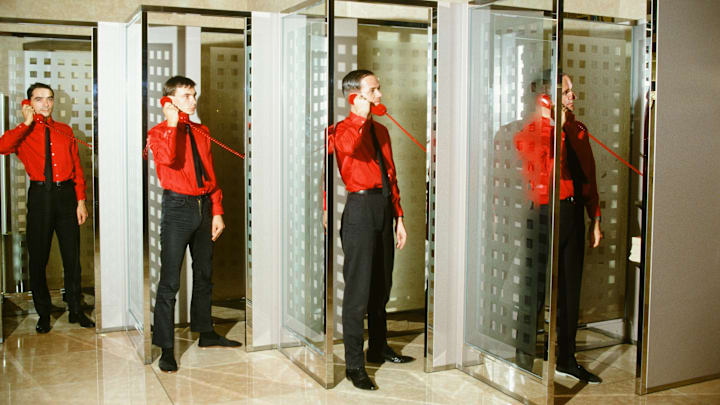
To call Hikashu a “band” is to undersell their entire existence. More accurately, they’re a long-running art project, performance collective, dadaist sound experiment, and—somehow—one of the most musically exciting groups to emerge from Japan’s new wave explosion of the late ’70s and early ’80s. Formed in 1978 and fronted by the inimitable Makigami Koichi (think: Iggy Pop by way of Noh theater), Hikashu were always less concerned with genre and more interested in deconstruction.
Whether they’re crooning jazz ballads, bashing out synth-punk, or throat-singing in a language only they understand, Hikashu is a sonic Rorschach test that continues to defy expectations.
Their self-titled debut, Hikashu (1978), introduced the group’s erratic style: a wiry blend of minimal synth, new wave punk, and surrealist performance art. The standout track “At the End of the 20th Century” ("20世紀の終りに") plays like a post-apocalyptic cabaret number, while “Model” (“モデル”) is Kraftwerk’s astonishing precision warped through an absurdist funhouse mirror.
Already, Makigami’s vocal gymnastics—swooping from falsetto yelps to guttural chants—make him one of the most distinctive frontmen of the entire technopop era.
Their second LP, Uwasa no Jinrui (1981), is arguably the group’s most “accessible” (if such a word can even be applied). Produced with a cleaner new wave polish, tracks like “Pike” and “Liar” flirt with synthpop convention before gleefully skidding off the rails into glitchy breakdowns and deadpan spoken word.
The band here feels tighter, punchier, and yet still teetering on the edge of theatrical collapse. Makigami’s voice, now fully weaponized, bounces like a rubber ball through every track.
By the time Natsu (1984) arrives, the band leans even further into avant-pop weirdness—elements of jazz fusion, world music, and musique concrète bubble to the surface. “Parisienne la Vache” feels like it escaped from a lost performance of Hair in space. “Natsu” (“Summer”) itself, however, is pure alien beauty: all delicate electronics and abstract longing, delivered like a poem recited in a dream.
And while the band’s early ’80s albums are essential listening for Japanese new wave fans, what sets Hikashu apart is their persistence. Unlike many of their contemporaries, they never really stopped. Their post-2000 work dips into experimental jazz, folk, and even traditional gagaku instrumentation, all filtered through Makigami’s playfully avant-garde lens.
Albums like Ten Ten (2006) and Anguri (2010) aren’t nostalgia acts—they’re living proof that Hikashu are still gleefully mutating, still impossible to pin down. Both prophetic and absurd, they remain one of the most rewarding and challenging trips you can take through Japan’s musical underground.
More music news and reviews:
 Add us as a preferred source on Google