

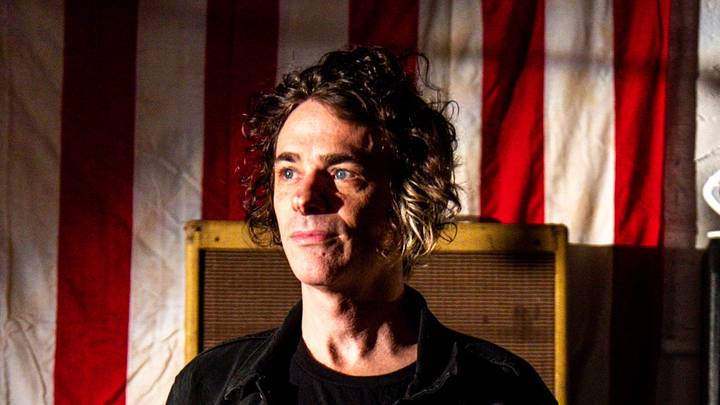
As America marks its 250th Independence Day, there's been mixed feelings in the air about how celebratory to be. From revisiting a little-known protest song back from 2001, it's clear that indie pop-rock band Self knows how to feel though.
Track 3 of the free B-sides compilation Selfafornia, "America," is an abrasive one-minute blast full of a repetitive refrain proclaiming, "I'm ashamed of it."
It stands in stark contrast to the upbeat patriotism of many anthems, and even to other anti-America rockers like much of Green Day's classic work. And in the current social climate, this track manages to be just as relevant as the other timeless hits.
Self's "America": A raw, dissonant protest in miniature
Despite the overall pop-rock pedigree of Selfafornia, "America" sounds like an intentional outlier. It begins with a brief four-second lead-in of guitar twangs and random drum hits played parallel with deep synthy squelches, already signaling the total lack of convention in the song.
Two nearly identical 8-bar choruses repeat the title refrain endlessly and monotonously, each preceding a very short sampled spoken-word bridge and ending on a clipped outro. The track spans only 24 bars at 92 beats per minute in 4/4 time, making it hard to believe that such a sluggish, noisy vignette is only 68 seconds.
The song manages to be extremely compact structurally while feeling sparse in form, giving it a jarring, unsettled quality that matches its blunt message. Selfafornia itself was a free internet release compiling B-sides and demos, so "America" was always meant as a throwaway or experiment rather than a polished single.
Chaotic form and unhinged production
The production of "America" reinforces its chaos. The first chorus erupts almost immediately after the intro, with distorted drums and a ringy, detuned acoustic guitar. These sudden crashes emphasize the anger and urgency of the chorus lines.
Between choruses the song pulls the rug out with two spoken-word breaks. The first delivers a sample that sounds to be from a heist movie, with the voices drastically deepened. This overlays rushed hits of combined guitar and drum that slowly collapse in rhythm before returning to the chorus.
The second break uses a similar tactic of disrupting any sense of timing, sampling a vacuum cleaner commercial (again deepened) and more fast-paced hits, this time faintly including an accordion playing random notes. These timbres being purposefully dirty and wrong helps achieve the overall cacophonous and unpolished effect.
Self's cynicism fitting over dissonant textures
Lyrically, "America" is as blunt and irreverent as its sound. The repeated chorus line “America, hey, I’m ashamed of it” is straightforwardly sarcastic as a blanket statement of shame about the country, delivered with a hint of sneer in Mahaffey’s voice.
No elaboration or justification ever arrives, it simply reiterates the phrase three more times each chorus, turning the title into a mantra of protest. In the final outro, lead singer Matt Mahaffey utters the line “God bless me” as a sarcastic echo of traditional patriotic "God bless America" taglines, highlighting the song’s bitter mockery of clichés.
This noisy experimentation isn’t entirely out of character: on Gizmodgery (2000), Mahaffey constructed similarly out-of-tune songs like "5 Alive" and "Chameleon". With the nature of Selfafornia containing scrapped songs from the record, it's easily possible that "America" was a third venture into the style.
A defiant accompaniment on the day of 250 years
In the context of the United States Semiquincentennial, the refrain of “America” feels especially provocative, voicing doubt and embarrassment. While Self has only had brief moments as a mainstream band, this kind of contrarian, offbeat message has a way of surfacing during national milestones.
"America" itself has always been obscure, releasing in Spring 2001 as part of the batch-released Selfafornia (fully released by July 27th), though it was individually removed from its download page due to its insensitive context following the events of 9/11, and has yet to be reissued on streaming.
The ragged guitars and sudden, syncopated breaks of "America" feel like a refusal to settle into any comfortable groove, standing out as one of Self's most aggressive little songs. Whether listeners love it or cringe at it, it remains an unmistakable example of Mahaffey's clever songwriting: one that winks at the conventions of patriotism even as it outright rejects them.
 Add us as a preferred source on Google