

SUSS albums tend to sound like they wandered in from somewhere else, which is not to say outer space, exactly, though there is certainly enough celestial drift in their music to make that a fitting description.
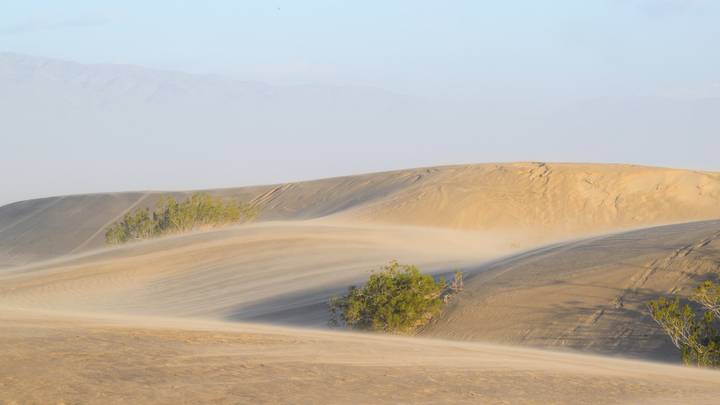
Instead, their work sounds more like some half-lit stretch of desert highway where the telephone poles look lonely, the motel signs buzz with a faintly sinister electricity, and the wind has somehow learned how to play a mean pedal steel guitar.
That has always been the group’s strange magic. SUSS makes ambient country feel less like an intriguing genre excursion and more like a gentle dust storm you can step inside, provided you are willing to slow down enough to let it move around you.
10 sunsets, 10 small disappearances for SUSS
With Counting Sunsets, SUSS lean even further into that hallowed, haunted territory, building an album as a suite of ten interconnected tracks with identical titles with only numbers delineating them (“Sunset I, Sunset II, etc.)
Here, that simplicity works because SUSS does not treat the sunset as a postcard image or some simple metaphor for universal wistfulness and regret. Instead, they treat it as a vanishing act: 10 sunsets mean 10 small disappearances and 10 chances to watch the light of day give out, with all the beauty or pain of the day prior left behind in the darkness.
Much like SUSS’s previous album, the music is patient and expansive. Plenty of ambient records mistake stillness for emptiness, or worse, mistake tasteful restraint for depth. SUSS avoids that trap by making their stillness feel populated.
There is movement in the margins: the soft pull of a sustained guitar, the spectral bend of pedal steel, the low electronic hum gathering beneath the surface, the occasional harmonica or piano line appearing like a dim light in the distance before the whole thing starts to shimmer again. It all sounds fresh and exciting, much like some of the best country and country rock albums of 1969.
“Sunset I” opens the album with that familiar SUSS glide, all dust, echo, and slow-motion ache, with just enough Western atmosphere to suggest wide-open space without tumbling into costume drama suffused with a janky Southern drawl.
This is not saloon music for people who own too many fringe jackets. It is more desolate than that, like looking out across a place that used to mean something to you (and may still mean something) but being unable to convey exactly what that meaning is.
That mood carries into “Sunset II,” one of the album’s loveliest early pieces, where the guitar and pedal steel do not so much as converse as hover near one another, with each leaving just enough room for the other to become a little stranger.
The electronics sit underneath like the mirage of a heat shimmer on a lonesome highway, giving the track an ethereal quality that never becomes overly weightless or soft. SUSS is very good at making beautiful music that still carries some depth—a little dirt on its boots.
“Sunset III” brings a slightly more unsettled pulse, with textures that feel gossamer at first and then, the longer they hang around, a bit uncannier. There is a faint, low rustle running through the track that helps to keep its prettiness from becoming too clean, and that is one of the reasons Counting Sunsets works as well as it does. Even at its most gorgeous, it never fully settles into comfort.
“Sunset IV” is one of the record’s most vivid moments, helped along by the way its harmonica and guitar nudge the music closer to the road, giving it a ghost-town quality without leaning on obvious imagery too hard. You can almost see the scene anyway: cracked pavement, late sun, a gas station that may or may not still be open, and dusty siroccos transporting tumbleweeds across the vast wasteland of America’s deserts.
“Sunset IX” quietly shows how far SUSS can bend a simple idea without snapping it, which is a much rarer skill than you might think. There is no grand climax here, no sudden bid for emotional overstatement. The reward is subtler and more durable: a slow accumulation of feeling, the sense that all these little sounds have been gathering into something grander.
Then, “Sunset X” closes the album with grace rather than finality, which feels exactly right for a record this committed to disappearance, echo, and organic remnants. It feels like the last line of light vanishing over the horizon.
Ambient country weathered into being
SUSS has often been praised for blurring Americana and ambient music, but what stands out on Counting Sunsets is how natural that blend now feels, as if the band has stopped proving the concept and is simply living inside it.
The electronic elements do not modernize the country instrumentation, and the country elements do not merely give the ambient pieces a rustic accent. They melt into one another until the whole thing feels less arranged than weathered into being, with pedal steel, synths, and guitar all caught in the same strange late-day haze.
That may be why the album feels so dreamlike without becoming too diffuse. These are short pieces by ambient standards, and that concision helps the record enormously, because SUSS do not linger until the spell wears off or allow the textures to become decorative through overexposure. They get in, leave an impression, and saunter off.
Counting Sunsets is a beautiful record, but not in the polished, bloodless way that word sometimes implies. It is beautiful. It is patient, because it lets silence do some of the talking, and because SUSS understands that the desert is never really empty, just as ambient country music (with strains of Gothic country) is never really empty when the right hands are shaping it.
The group has made one of its strongest records by trusting the smallest things: a bent note, a fading loop, a haunted chord, a bit of susurrus in the distance. Counting Sunsets finds its grandeur by refusing to overstate it, lingering in that thin strip of evening where the world briefly feels both empty and impossibly full.
 Add us as a preferred source on Google