

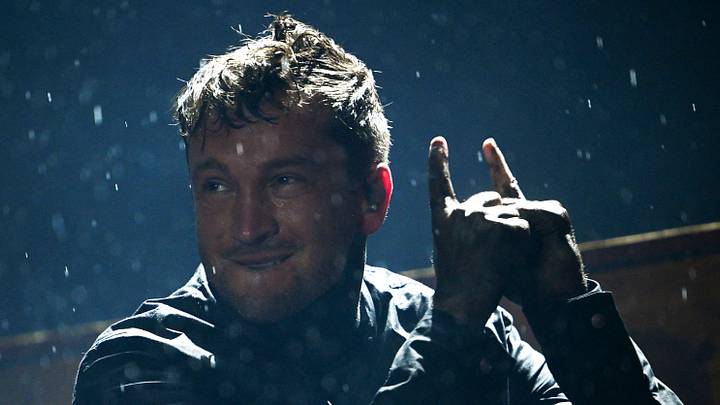
Before Twenty One Pilots became one of alternative music's biggest names, the band was an independent project led by Tyler Joseph, with a growing collection of songs that would eventually define its earliest sound.
Among the releases from this period is the little-known Johnny Boy EP, a four-song collection whose history has become muddled by conflicting dates, rumors about its contents, and the complicated origins of several songs that followed the band into its self-titled debut album.
Although it is frequently dated May 4th, 2009, the EP's precise release date remains difficult to verify or establish. Its history is not quite as straightforward as its sparse tracklist suggests, though one of its songs would play a role in bringing Josh Dun into the band's orbit.
Twenty One Pilots' Johnny Boy EP: A homemade release with an uncertain history
The Johnny Boy EP is commonly associated with early 2009, when Twenty One Pilots was still developing its identity as an independent act. Rather than receiving a conventional commercial release through a record label, the collection was distributed for free, with homemade copies made on demand.
One particularly important piece of evidence comes from a Battle of the Bands performance at Alrosa Villa in Ohio on November 10, 2009, where Joseph introduced the band and told the audience that free demos containing four songs were available at the merchandise table.
That announcement provides a tangible connection between the EP and the period immediately preceding the release of Twenty One Pilots, the band's self-titled debut album, which Joseph also announced at the show would be released relatively soon after.
Four songs that helped set the stage
The EP consists of "Johnny Boy," "Air Catcher," "Time to Say Goodbye," and "Friend, Please." Despite some online tracklists (such as on Genius) that include "Addict With a Pen" and "Taxi Cab," these are fan additions, contradicting Joseph's own announcement at the Battle of the Bands event that it contained four songs.
Personally, I find it notable that two of my three favorite songs from Twenty One Pilots were already featured on the EP. Alongside "Implicit Demand for Proof," which was not included on the collection, "Johnny Boy" and "Air Catcher" are the album's strongest songs.
With that choice of a tracklist, the EP feels like a particularly effective showcase of the band's early material, even if there is no definitive evidence that the songs were selected specifically to promote the upcoming album.

From early demo to album standout
Of the EP's four tracks, "Air Catcher" offers one of the clearest examples of how the band's early recordings evolved. The version on the Johnny Boy EP is a completely different demo recording, distinct from the version that appeared on the self-titled album.
The EP's demos give it historical value beyond its limited availability, preserving the earlier stages in the development of the band's songs. "Air Catcher" would also receive a later studio re-recording in 2011 with Josh Dun, further connecting the song to the band's evolving lineup and sound.
For fans interested in the differences between early demos and finished recordings, this is one of the most compelling reasons to seek out the EP. However, its most significant track may be "Time to Say Goodbye," a song that has remained exclusive to this early release in its original form.
The song that connected two bandmates
Twenty One Pilots' track incorporates elements of "Con te partirò," an Italian song famously performed by Andrea Bocelli and popularized further in its English-language version, "Time to Say Goodbye," with Sarah Brightman.
Unlike the EP's other three songs that appeared on the full-length album, "Time to Say Goodbye" never became part of the standard self-titled tracklist, a decision commonly attributed to its use of material from the 1995 composition. However, it was available online as a free download just two days after the album's release.
The song also surprisingly impacted the band's later lineup: "Time to Say Goodbye" was the first Twenty One Pilots song Josh Dun heard, helping introduce him to Joseph's music before the two eventually connected. In such, one of the band's least widely available songs helped set the stage for a partnership that would become central to Twenty One Pilots' identity.
"Johnny Boy" finds a new audience
For years, the Johnny Boy EP has occupied an unusual place in the band's discography. Its physical distribution, uncertain release date, and lack of a conventional label release have made its history harder to reconstruct than that of the band's later albums.
Online databases and fan-maintained discographies have helped preserve information, but conflicting entries have also contributed to persistent misconceptions. Still, the songs continue to find listeners, as "Johnny Boy" reached 100 million streams on Spotify in the first week of September 2026.
Despite always being called the Johnny Boy EP, the release actually has no confirmed official title, as its packaging is only labeled with the band name. Its opening track has become the release's de facto name in fan discussions and online discographies as a result, likely because it rolls off the tongue a bit better than "the untitled debut demo disc."
An obscure chapter worth revisiting
The Johnny Boy EP is an unconventional piece of Twenty One Pilots' discography. It has no firmly established release date; its distribution was informal, and its contents have been misrepresented in some online listings. Nevertheless, its four songs capture an important moment in the band's early development.
"Air Catcher" preserves a demo that would evolve into a more familiar album track, while "Time to Say Goodbye" connects the collection to both the band's copyright complications and the eventual arrival of Josh Dun. Meanwhile, "Johnny Boy" has outlived the obscurity of its original release to become a streaming success in its own right.
The EP's history remains incomplete, and some details may never be conclusively settled. But it offers a snapshot of Twenty One Pilots before the band reached its later heights, preserving songs that would continue to matter long after the homemade CDs had disappeared from circulation.
 Add us as a preferred source on Google