

What makes a great rock singer? The answer is lots of things, and yet, very few. Rock is such an expansive genre that it can incorporate the genius of Freddie Mercury while also allowing for the louder vocal brilliance of Tom Waits.
Some singers become icons without ever being able to sing like Roger Daltrey, for instance. Daltrey's voice helps lead to both bombastic excellence for the Who and also offers enough purity to pull off more melancholy songs.
Perhaps the best example of one band being great because of the two styles of two different iterations of vocalists is Van Halen. David Lee Roth was limited in range, but he could entertain. Sammy Hagar had the stronger voice, but the band's more ballad-type tunes with him are less thrilling than the ragers Roth pulled off.
4 rock singers who originated in the 1970s who were completely brilliant
Like the four singers that follow, one does have to be a Mercury or a Hagar to offer brilliance. Being different is quite good, too.
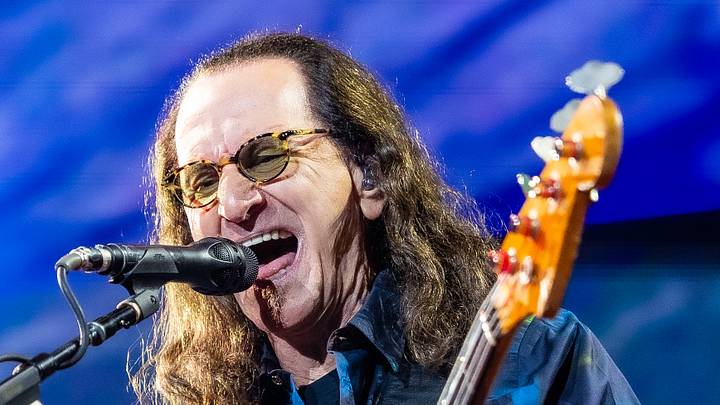
Geddy Lee of Rush
Many non-Rush fans try to criticize Lee's voice as sounding like he has taken a hit of helium. He certainly does have a higher-pitched voice, but that helps the instrumentation be all that unusual. He should have nothing to do with rock on the surface, as he lacks a real ability to rage or be exceedingly nuanced.
But Rush isn't Rush without Lee's voice. He sings the words that drummer Neil Peart wrote (mostly), and it is the way Lee can phrase a story that makes him special. He isn't going to win any awards doing opera, but he doesn't need to. Lee just needs to perform Rush songs, and in a way no one else would be able to.
Robert Smith of the Cure
As with Lee and Rush, the Cure wouldn't sound the same without Robert Smith's wrably notes. He is a fantastic guitarist, just as Lee is an elite bassist, but anyone else singing the tracks would have detracted from the goth icons' tunes.
It isn't in the limits of his voice that Smith hides away from, but in how he embraces his own sound and how that augments the kind of music his band makes. He can sing a lovely lullaby or bring forth great anger, such as on the brilliant Pornography album. Smith is a perfect example that it isn't how pure one's voice is, but how it is used.
Bob Geldof of the Boomtown Rats
The Boomtown Rats frontman is likely better known for his political activism and for creating Live Aid at this point, but his mercurial band also had several great tunes. They didn't feature a singer with brilliant polish to his voice, though.
Instead, Geldof relied on a grittier approach, but he understood nuance and how to create expression. He was more artful than technically brilliant, and that is how the Boomtown Rats (and his solo career that followed) needed to be. Still, if Geldof is remembered for other things than "I Don't Like Mondays," that's fine. The world is better off having had him in it.
David Johansen of the New York Dolls
Whether Johansen was doing Dolls songs or performing as his alter ego, Buster Poindexter, he had a style all his own. His faux seriousness wasn't meant to be solely comedic, though. Instead, he delivered fun, and sometimes bruising, tracks, and made himself completely unforgettable.
The only issue Johansen really faced was that in the years with his band and during his solo career, he would reach a level of popularity, only to have that quickly diminish. Maybe that is how the gruff-voiced performer wanted things. After all, he was an art punk at heart.
 Add us as a preferred source on Google