

Contrary to its public persona as the reddest of all musical genres, country music has always been purple. Country music has the DNA of liberal populists like Woody Guthrie as much as the Christian conservatism of the Carter Family. And even the Carter Family’s values were subjected to scrutiny when A.P. and Sara divorced in 1936.
As Nashville attempted to market itself to mainstream America, the subject matter and public images of the sounds and stars stayed mostly on the conservative side of the ledger through the ‘40s and ‘50s.
But it was headed for a showdown. Willie Nelson and Waylon Jennings made it official when Willie jumped ship from Nashville to Austin and the two major stars launched what would soon become known as Outlaw Country.
The forgotten albums that helped invent alt-country
The merry band – the Outlaws – were country music in microcosm. Willie was largely apolitical, though he was a passionate believer in personal freedom. Waylon was a traditional conservative while Kris Kristofferson was a fiery liberal. And Johnny Cash? Politically unclassifiable.
By challenging the homogenized Nashville sound – a narrow hitmaking machine known as countrypolitan – the Outlaws laid the groundwork for younger artists from the middle and the left to reclaim country music. Today, when we think about this evolution, we usually focus on the emergence of “country rock,” which had major commercial impact in the 1970s.
This was music made by southerners with twangs. They had grown up on Hank Williams but had also fallen in love with the Beatles. Lynyrd Skynyrd had big-time Billboard success. The Allman Brothers were beloved by critics and fans alike. Charlie Daniels, Marshall Tucker, ZZ Top .. they all had hit records by playing a new brand of hard-driving, electric country.
Albums by those pioneers – Second Helping, Eat a Peach, Marshall Tucker’s self-titled debut – went on to become legendary. But they were far from alone. There were plenty of other artists working a little further off-center. No one knew it at the time but they were laying the groundwork for something a bit different.
Alt country didn’t exist at the time. There was outlaw country and country rock, but then there were these other albums that moved the needle a little farther. They certainly were indebted to both outlaw and country rock, but they had a different vibe.
In some ways, they sounded far closer to traditional country than the outlaws and rockers. In other ways, they were far removed. As such, they were both homage and challenge, and their influences still exist to this day.
Here are seven of the best early alt country examples pre-2000.
The Gilded Palace of the Sun by the Flying Burrito Brothers (1969)
The only reason Graham Parsons is not seen as the grand old man of country rock that he didn’t live long enough to ever get old. Parsons died when he was 26 but in his brief time on earth, he was part of four vital music outfits – the International Submarine Band, the Byrds, the Flying Burrito Brothers, and finally, as a solo artist.
When he joined the Byrds, he helped them create the seminal country rock album Sweetheart of the Rodeo (1968). Then he was off to his next project, taking the Byrds’ Chris Hillman with him to form the Flying Burrito Brothers.
Their debut album, The Gilded Palace of the Sun, was unlike anything country fans or rock fans had heard before. It mined all forms of music, with Parsons and Hillman harmonizing like the iconic Louvin Brothers while Sneaky Pete Kleinow provided the pedal steel accompaniment to Parsons and Hillman’s electric guitars.
From the opening “Christine’s Tune” to the classic tearjerker “Hot Burrito #1,” this was undoubtedly country music, but with a fresh new sound.
The Adventures of Panama Red by the New Riders of the Purple Sage (1973)
By 1973, the New Riders of the Purple Sage no longer had their most famous members. On their first few albums, Jerry Garcia. Mickey Hart, and Bill Kreutzmann of the Grateful Dead had been significant contributors.
By 1973, it was frontman John Dawson playing with the electric guitar of David Nelson (who sang lead on the title track) and the pedal steel of Buddy Cage, and the rhythm section of Dave Torbert (who shared lead vocals with Dawson) and Spencer Dryden. The only remaining Dead connection was Donna Jean Godchaux, who sang on a couple of tracks.
The music was another classic blend of traditional and new, but most remarkable were all the overt references to drug culture. It could fit as easily into an up-tempo rocker like “Panama Red” as into the mid-tempo classic country lament like “Lonesome L.A. Cowboy.”
Fear and Whiskey by Mekons (1985)
As the ‘70s gave way to the ‘80s, the entire concept of country rock was no longer new. The genre had scored major chart success. And it was ready to branch out into a truly alternative direction.
Enter Mekons, about as far removed from a Nashville country band as you could find. They were a post-punk outfit from Leeds who had already released a couple of punk albums and gained critical acclaim and a small, loyal fanbase. So of course, their next move was to put out a country album.
Fear and Whiskey isn’t exactly a country album but it certainly dabbles, especially in the work of the avant garde Scottish fiddler Suzie Honeyman. Her work on songs like ”Trouble Down South” or “Abernant 1984/5” echoes John Cage’s viola with the Velvet Underground, or the devil’s solo in Charlie Daniels’ classic “Devil Went Down to Georgia.”
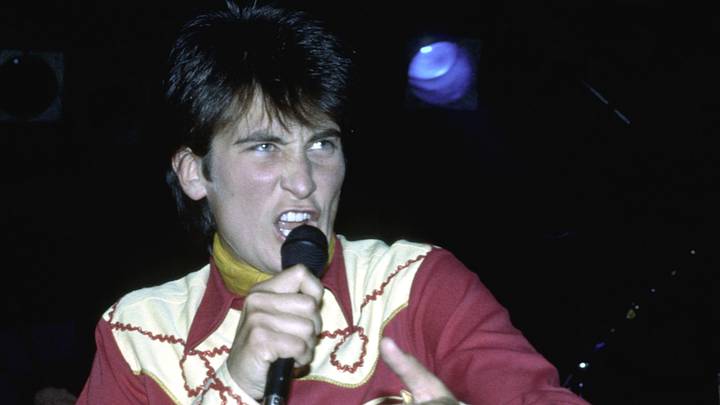
Angel with a Lariat by k. d. lang and the reclines (1987)
You can get into some big-time arguments by trying to rank k. d. lang’s albums because she would never be pinned down to a sound or a style. Her major label debut, produced by Dave Edmunds, does a phenomenal job of striking the balance between modern rock and old school country, arriving at a classic rockabilly sound with a somewhat different recipe from the Wanda Jackson’s of the world.
Lang is a flat-out sensational singer who can sell a song a wide range of styles and in Ben Mink, she has a strings player who can put a new twist on standard banjo and mandolin. Maybe it was the Canadian roots.
This album can go from playful – “High Time for a Detour” – to classic longing – “Diet of Strange Places” – to the classic anthem of “Rose Garden”, all while remaining coherent.
Lucinda Williams by Lucinda Williams (1988)
Williams was basically on the shelf for eight years after recording a couple of albums for Smithsonian’s Folkways label. But when she returned, it was with collection of new songs that range from the bright “I Just Wanted to See You So Bad,” with organ underpinning the electric guitars, to the classic slice of country pop “Passionate Kisses.”
She could go big and bold in “Changed the Locks” or plaintive on “Am I Too Blue.” Her voice would grow rougher and rougher over the years, but even early on, she could bring a gravitas to anything she sang.
It would be another ten years before the rest of the world finally recognized that she was quite possibly the best country rock artist we had going, when she released Car Wheels on a Gravel Road in 1998.
No Depression by Uncle Tupelo (1990)
For many fans, this is where alt country really begins. The rest is just setting the table. When Jay Farrar’s fuzzed up guitar plays the opening of what sounds a lot like an old school country song – “Graveyard Shift” – we are traveling someplace new. This is country rock that doesn’t just pick up the rock – it picks up the latest rock trend – grunge.
Then Jeff Tweedy takes on the lead vocals on “That Year,” with its galloping rhythm. Tweedy and Farrar would trade writing and singing throughout. Eventually, they’ll confirm their country roots with a powerful, roughed-up take on the aforementioned A. P. Carter’s classic title track. Farrar would pick up the harmonica when Tweedy sang “Screen Door,” and they closed things out with a cover of the traditional “John Hardy.”
Farrar and Tweedy would stay together a few more years, producing several more first-rate albums, ending with Anodyne in 1993. At that point, Farrar left to from Son Volt, and Tweedy went on to even greater success with Wilco.
El Corazon by Steve Earle (1997)
Earle is an outlaw legend at this point. But early in his career he struggled to get much traction in Nashville. He finally broke through in 1986 with the release of Guitar Town. Along with Randy Travis and Dwight Yoakam, Earle helped birth what came to be known as neo-traditional country that year. Then he seemed on the cusp of crossover stardom with the searing Copperhead Road a few years later.
But the massive success did not come. Most of it was due to Earle's serious addiction problems which almost took his life. By the time he came out of rehab, he was a different performer. El Corazon, which I think gets overlooked in his canon, was a clear pronouncement that Steve Earle was back.
The first two tracks – the politically charged, misty hope for a better future “Christmas in Washington” – and the utterly compelling nightmare of racial violence “Taneytown” – set the tone. Later, he would team up with Del McCoury for some classic bluegrass and with the Supersuckers for some hard-edged grungy rock and roll. It all ended with another wistful memory in honor of Townes Van Zandt, who had just died.
Earle is 71 now and still going strong, fighting the good fight, and extending the marriage between rock and roll and country music. And the alt country catalogue keeps growing with bands like the Avett Brothers and Lucero and the indie-minded punk-tinged sound of Wednesday and Ratboys carrying on the tradition.
 Add us as a preferred source on Google