

Fifty years ago, rock and roll was at a crossroads. It was entering its adulthood. “Rock Around the Clock” was now more than 20 years old. And like all freshly minted grown-ups, it was asking some pretty serious questions about its life.
Those wild teenage years, when any kin with a guitar and a garage could record a rock hit, seemed to be fading into the rearview as rock music became serious business.
Consider this. Ten years earlier, in 1966, the number two song on Billboard’s Hot 100 songs of the year was “96 Tears,” by ? and the Mysterians, perhaps the definitive garage rocker.
Seven crucial debut albums that came out in 1976
In 1976, that spot was occupied by “Don’t Go Breaking My Heart,” by Elton John and Kiki Dee. John, who as much as anyone had helped maintain rock’s stranglehold on the pop charts in the early ‘70s, was now scoring big with the catchiest, sappiest, most lightweight brand of pop music imaginable -- music with barely a hint of rock and roll.
Under the surface, changes were percolating. As dance music in the form of disco was beginning its brief takeover of American popular music, a new generation of rock and roll was emerging. Eventually, it would spawn the explosions in punk and new wave that would add fresh life to an aging genre. It was there, though in its embryonic form it was not exactly visible – or audible – just yet.
Now consider this. The B-52’s, Bad Brains, Black Flag, and the Buzzcocks all formed in 1976. And that’s just the Bs. The Cars and the Clash are from the Cs. The list goes on.
These bands did not release albums in ’76. Those would come later. But the groundwork for many of the genres that would define 1980s rock was being laid.
Meanwhile, some bands were in fact releasing debut albums in 1976. Some helped launch new genres. Others merely showed that established forms still had plenty of room to grow. Some were hits. Others were overlooked. With the benefit of hindsight 50 years on, we can now look back with new appreciation for what each of the following artists was creating.
Here then, are seven vibrant debut albums from fifty years – from seven distinct musical genres.
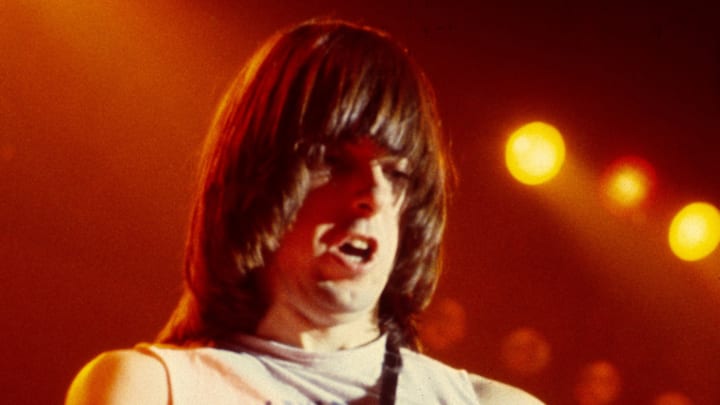
Punk - Ramones by Ramones
You probably know by now that none of the original four punk rockers were named Ramone. They were just four kids from New York (Dee Dee had spent his formative years in Germany, but came to Queens as a teenager) who knew a few chords and liked to play fast and loud.
They had enough melodicism to write catchy tunes and the good sense to stick to subjects they knew. From the moment listeners heard the iconic “One, two, three, four” kicking off “Blitzkrieg Bop,” they were hooked. The same driving rhythm informed “Beat on the Brat” and "Judy is a Punk.”
Then drummer Tommy (future producer Thomas Erdelyi) served up his downright romantic composition “I Want to Be Your Boyfriend.” The Ramones were not the first punk band, but they were the first successful rock act to infuse punk into every song they sang, and in so doing, they started a revolution.
Riot Grrrl - The Runaways by the Runaways
Riot Grrrl, as a named genre, wouldn’t officially begin for another 15 years. But it was right there in 1976. Like the Ramones, the Runaways weren’t the first all-girl rock band. They drew a lot from the Pleasure Seekers a decade earlier. But, largely due to their Svengali manager, Kim Fowley, they got a lot of attention.
“Cherry Bomb,” snarled by 15-year-old Cherie Currie, hit as hard as any punk rock song of the decade. But the entire album is 30 minutes of grinding, pummeling rock, powered by Lita Ford’s shredding guitar and a muscular rhythm section. The closing track, “Dead End Justice,” is just as potent as “Cherry Bomb.”
Today, the Runaways are often remembered as Joan Jett’s first band – the one that influenced her to record with the all-male Blackhearts for most of her career. But the Runaways were much more than that, and paved the way for all the all-girl, hard rockers that would follow.
Prog rock - Tales of Mystery and Imagination by the Alan Parsons Project
Parsons began as an engineer but soon worked his way up to an in-demand producer. In 1976, he took a largely unknown songwriter named Al Stewart and convinced him that if he paid as much attention to the sound of his music as he did to the lyrics, he might attract a bigger audience. That resulted in Year of the Cat, and it made Stewart a star.
But at the same time, Parsons was creating his own musical endeavor – or project – with a different songwriter, Eric Woolfson. Their ambitious idea was to base albums on other aspects of pop culture, usually literary in nature. Their debut album was built on the works of Edgar Allan Poe. There had been plenty of progressive rock before APP, and there had been plenty of concept albums.
A lot of fans considered this trend to be antithetical to rock & roll and the cause of its dwindling impact. To be sure, there are plenty of music fans who did not like the Alan Parsons Project, even though they achieved more mainstream success in subsequent albums.
But using interchangeable lead singers and identifying the band’s music with a producer would have a big influence on later pop music.
New Wave - Blondie by Blondie
In the same way that Alice Cooper became the eponymous name of both singer and band, fans were confused by whether Blondie was a band or just a nickname of frontwoman Debbie Harry. Regardless of name, the music she and her guitarist-partner Chris Stein created in the clubs of New York in the mid-‘70s provided the sound that made the city dance.
Blondie stood on the side of the disco movement proving that rock & roll music was, in fact, dance music. “X Offender” was classic ’60s garage rock with a modern sheen. They could be sultry on “Look Good in Blue,” or classically romantic on “In the Flesh.”
But it never sounded old-fashioned. By the time they got to “Rip Her to Shreds” and “Kung Fu Girls,” Blondie sounded like no band that came before them. It was new – eventually it would be called new wave.
Fusion - Land of the Midnight Sun by Al Di Meola
In the mid-‘70s, Jeff Beck was the jazz fusion guitar god. 1975’s Blow by Blow was a huge crossover hit, opening the door for other virtuosos who could now dream of their own recording contracts.
North Jersey’s Al Di Meola might have been the best of them all. His extraordinary technical mastery created guitar sounds that had rarely been heard on American albums. Lightning fast runs, expressive muting techniques, and a blend of rock and flamenco. Di Meloa could play anything and make it sound exciting.
Beneath everything, there was always an understanding of melody that allowed his wild, extravagant jazz explorations to remain discernible to non-jazz fans. The seven-minute “The Wizard” that kicks off his debut album has all that and more. The ten-minute “Suite: Golden Dawn” travels through more sonic and tempo changes than you get on most entire albums.
Southern rock - Tom Petty and the Heartbreakers by Tom Petty and the Heartbreakers
American audiences didn’t discover Petty until 1977, when his single “Breakdown” caught a wave. By that time, the Florida native had already established himself in the UK. Like others on this list, he was a bit of a throwback, playing Byrds-inspired folk rock but with a harder rock edge.
That was clear on the infectious “American Girl,” as well as on the prickly “Hometown Blues,” with the legendary Donald “Duck” Dunn on bass.
Then there is the hardest of his early rockers, “Strangered in the Night,” which kicked off the second side of the original LP. This had a blues vibe, and like so many of the other songs highlighted on this list, it managed to sound old and new at once.
A few years later, Petty would establish himself as one of the major players in American rock and roll, a position he would maintain for the next forty years until he died in 2017. I’m calling this southern rock, but it is really just good old, standard issue, kick ass pure rock.
?????? - Dr. Buzzard’s Original Savannah Band by Dr. Buzzard’s Original Savannah Band
There is no easy generic label for the band formed by the Browder brothers in New York in the mid-‘70s. They were clearly influenced by the nascent disco movement, but their songs were far more ambitious, applying the ethos of old-school big bands to the new music.
Their primary vocalist, Cory Daye, didn’t merely have an iconic voice. Her multi-cultural background with both Puerto Rican and Syrian ancestry introduced a sound that would one day be known as “world music." Piano player Stony Browder created the soundscapes. His brother, who went professionally by August Darnell, contributed to the lyrics.
And on their big hit, “Cherchez La Femme,” Daye told the story. They only lasted a few years before the brothers went their separate ways and Daye launched her own solo career, but Dr. Buzzard was Latin-World-Dance music before most of America ever considered putting those terms together.
 Add us as a preferred source on Google