

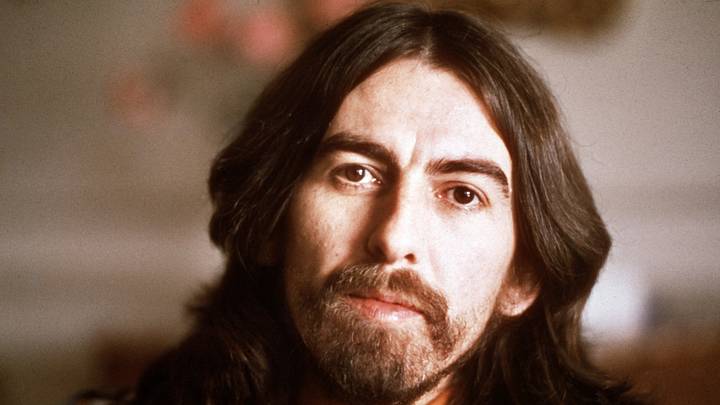
How good a songwriter was George Harrison? Type that question into Reddit and stand back. In ten minutes, people will be at each other’s throats. After twenty, you’ll probably be changing your username. George may have been the quiet one, but his artistic merit still causes loud debate, a quarter century after his death.
The simple pro and con arguments go like this:
Pro: George was the best writer in the Beatles but was suppressed by John and Paul. As young as he was – he had barely reached 20 when Please Please Me was released – it took him many years to have his voice heard.
George Harrison – brilliant or lucky?
Con: George learned from the greatest rock & roll songwriting team that ever lived and improved his decent gifts into something well above average. He certainly had some highs, but he produced a lot more mediocre tracks than his fans care to admit.
I wish we lived in a world where you could split the difference between these two takes. Sadly, we do not.
When it comes to Harrison, I am a contrarian. It’s not that I take one side or the other in the above-referenced debate. I am in that middle territory. In my opinion, George Harrison – to borrow a sports cliché – was in the Hall of Very Good. He was better than most of the other people who wrote rock songs for a living. He was not elite.
I don’t think the comparison with John and Paul is much of a contest. Paul McCartney is the greatest English-language pop melodist since Cole Porter. John Lennon, as a rock and roll writer of both music and lyrics, may have been even better. There’s a reason why they forever changed the planet’s musical landscape.
Next to them, Harrison wrote a number of very worthy tracks. But I cannot see putting him on their level.
I am a Harrison contrarian because I am lukewarm about most of the songs and/or albums that his fans love the best. I don’t say they are bad (well, with one exception, but he didn’t even write that one). They just aren’t my favorites.
Here’s a quick example from his Beatles’ days guaranteed to piss off his fans. For the record, that is not my intention. This is just my opinion. I think “Old Brown Shoe” is a better song than “Something.” Maybe I’m the only person who feels that way. I know plenty of people who think “Something” is one of the most beautiful love songs in the rock genre while “Old Brown Shoe” is about … well, an old brown shoe.
“Something” puts me to sleep. I find it pleasantly yawn-inducing. I find simple McCartney love songs like “And I Love Her” and “I Will” superior. I don’t even love “Here, There and Everywhere,” but I would choose it over “Something” nine out of ten times. (See, I don’t hate “Something.” One out of ten times, I will happily listen to it.)
“Old Brown Shoe,” on the other hand, shows off the very best part of George Harrison as a songwriter.
Melodically, he could not match Paul. Lyrically, he could not match John. But rhythmically he was as good or better than both. Harrison’s best songs – and again, there are plenty of them – always have an intriguing off-kilter beat, often derived from his early skiffle influences. Later, eastern music and old-school blues would dictate the rhythm in some of his best work.
Harrison wrote a lot of songs and I’m not about to go through all of them. Not today at least. But I do want to try and capture where he soared and where he stagnated by focusing on three distinct phases of his career. We’ll start with his work with the Beatles.

The Beatles
Harrison officially contributed 22 songs to Beatles albums (or, in two cases, as the B-side of non-album singles.) Other songs were rejected, primarily by John and Paul, after George presented them. He would revive many of those numbers when he went solo after the band broke up in 1970.
His first entry came on With the Beatles, their second studio album released in the UK in 1963. It was called “Don’t Bother Me” and it was rather good. Its bluesy punch paired nicely with John’s rocker “It Won’t Be Long” and Paul’s romantic “All My Loving.”
It would be a few more years and albums before we would hear a George original again. “You Like Me Too Much” came out on Help! in 1965. It was OK I suppose. An old-timey vibe, equally cute and dull. That was characteristic of many of George’s lesser efforts. They were often clever. But they were often only partially baked.
That is true of one of George’s little-remembered Beatles songs, “Blue Jay Way.” I’d argue that based on the way it starts – its misty, eerie music rising up out of the ground as George intones “There’s a fog above L.A.” – this could have been a truly great song. But it goes nowhere. It’s as if he simply forgot to finish it.
I don’t know that George ever wrote a bad song for the Beatles. Well, except for “Only a Northern Song,” which cribs from the far superior “If I Needed Someone” and was largely written as a spoof. And he had plenty of really good ones.
“Taxman” is a great rocker which the band chose to open Revolver, quite possibly their best album. “Within You/Without You” is among the best abstract songs the Beatles ever did. It was also their longest song – at least for about 15 minutes until “A Day in the Life” showed up later on the same album.
“While My Guitar Gently Weeps” is an epic and to offset my dismissal of “Something,” I’ll admit that “Here Comes the Sun” is irresistible. These are all very good songs. Maybe great songs. I suppose it depends on where your threshold is for greatness.
On the other hand, I find some beloved numbers lacking. “Savoy Truffle” and “Piggies” are fun and clever, but great songs? I don’t hear that. “Long, Long, Long” is pleasantly dull. “I Me Mine” is too underdeveloped, “The Inner Light” too pretentious.
Harrison contributed a lot of fine songs to the most important rock band of all time. That’s not bad. Way better than I ever did. Way better than a lot of actual songwriters did. But I don’t hear genius in enough of his Beatles output to elevate him the way his champions do.

All Things Must Pass
If you are a George fan and took umbrage at my opinions regarding his Beatles’ output, maybe skip this next section. I get enough hate mail as it is.
The thing is, I happen to think All Things Must Pass is an extremely overrated album. I understand that is not the popular belief. It went to number one. It had a number one single. He beat both Paul and John to the top as a solo artist. Rock critics adore ATMP. It was a triple album, for God’s sake. The first of its kind, depending on how you define its kind.
To me, at least some of the album’s success grew out of the fact that it was an event. It was technically his third solo release but it was his first after the Beatles formally disbanded.
As an actual collection of music, I think about half of the 23 tracks are worth your time. They are well above average. That’s a lot of good music. The rest? Pretty mundane to my ears.
I mentioned I was a contrarian regarding Harrison. Here’s where it really shows. His fans think the opener “I’d Have You Any Time” is sublime. I find it downright boring, regardless of the contributions of, and connection to, Bob Dylan.
Then we get “My Sweet Lord,” a number one smash hit. I don’t care much about the legal issues that caused George so much angst in subsequent years. I just find this song to be another “Blue Jay Way.” Not that it sounded anything like “Blue Jay Way.”
The songs couldn’t sound more different. But like the earlier track, it begins in greatness and then simply fails to go anywhere. It is redundant to a stunning degree. (This issue will come back later – foreshadowing.)
Do I need to keep saying I actually think George Harrison was very talented even if I don’t like a lot of his output as much as some do? Well, I’ll say it again. The next two songs – “Wah Wah” and ”Isn’t It a Pity” are among the best he ever wrote and among the best songs of 1970.
Most of side 2 is mediocre, but the first two tracks are interesting. “What is Life” is a good rocker and was a decent hit. But I contend that had you heard that song in 1970 and were told it was from some new, unknown band, you’d say, “yeah, they’re OK.” You would not have gone any further in your praise.
And the song that comes right after it – “If Not For You” – is a beautiful love song. It was also written by Dylan.
Side 3 is the best part of the album. “Beware of Darkness” is a classic. George was not a great vocalist and he doesn’t do his own composition justice here. It would take the more emotive voice of Leon Russell to bring out the genuine menace George wrote into the track. “Apple Scruffs,” a love letter to fans, is very sweet. The side ends with the title track, one George’s best slower meditations.
The second half of the album does not live up to the promise of the first half. “Art of Dying” is a good rocker. The final two sides are instrumentals and “Out of the Blue” reveals a very solid understanding of the blues. That wasn’t always part of George’s rock arsenal. But I think you kind of know the second half is thin when he includes another version of “Isn’t It a Pity” to help fill things out.
ATMP is a very good album. I might even accept borderline great. But there is too much mediocre material for me to agree with the POV that is an all-time classic.
The problem for most Harrison lovers is that he never did another album as good. At least in most people’s minds. Like I said, I’m a contrarian when it comes to George Harrison.

Post-All Things Must Pass
George released nine more albums after ATMP. Many did not perform well. Some were destroyed by critics. He also did some work with the supergroup the Traveling Wilburys, which was more warmly received.
I won’t make great claims for most of the albums George released between 1973 and 1982. They were an uneven lot. But I will say that he was still writing some very good songs. Just not enough of them.
“Give Me Love” and “Living in the Material World” from the follow-up to ATMP are very good songs. “Woman Don’t Cry For Me” had a great groove.
On the same album, he gave us “This Song,” which was a very clever commentary on the “My Sweet Lord” troubles, but is not special beyond that. Even the largely-reviled Dark Horse album has a fairly moody classic in “Simply Shady.” I remember thinking it was an Ian Hunter/Mott the Hoople song when I first heard it.
George took five years between Gone Troppo in 1982 and Cloud Nine in ’87. Plenty of fans thought George had called it a day. But he returned with some of his very best work.
Cloud Nine, the last solo album released during his lifetime, is my favorite of his entire discography. It is far from perfect, but in the title track, “When We Was Fab,” and especially “Devil’s Radio,” George was turning out some great material. There are other songs on Cloud Nine that I like very much.
Sadly, his number1 smash "Got My MInd Set On You" was not one of them. George did not write this one, so it really says nothing about his songwriting. Or maybe it does, in a small way. James Ray's original, written by Rudy Clark, is not nearly as redundant as the version George and Jeff Lynne came up with. Is it catchy? Of course. Catchy and utterly mindless, especially when compared to the surprisingly soulful original.
Working with Jeff Lynne developed into the Traveling Wilburys, along with Dylan, Tom Petty and Roy Orbison. They put out two enormously fun records of very good rock – roots, blues, folk. They covered it all.
Though all of their original material was credited to the band, it is fair to say that Harrison was primarily responsible for writing several of their very best tracks, including “Handle With Care” and “End of the Line.”
There would be no creative resurgence after the Wilbury’s project. At least not in any popular sense. George was diagnosed with throat cancer in 1997 and then suffered a knife attack two year later that very nearly took his life. Cancer finally did take it in 2001.
A year later, his final album, Brainwashed, was released. It was finished by Lynne and George’s son Dhani. Its opening track, “Any Road,” showed typical quality. I’m not about to claim it is an all-time great, but it was a very good song. A very good George Harrison song. He left us a lot of those. I hope I don’t have to say he was better than Lennon and McCartney in order to acknowledge that fact.
 Add us as a preferred source on Google