

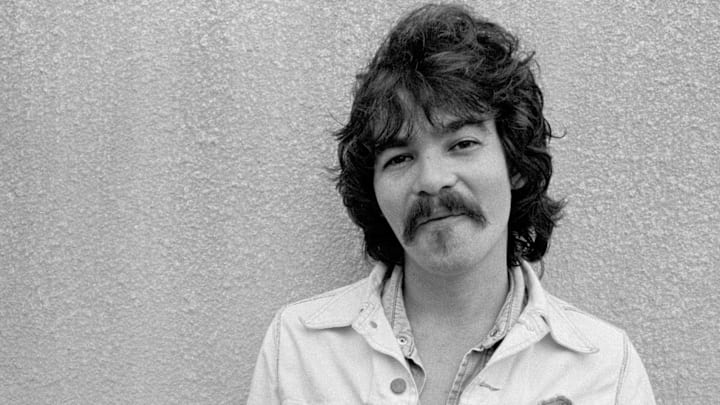
John Prine would have turned 80 this October. There’s no telling what musical treats he might have delivered over the past five years had he not succumbed to COVID in April 2020. The singing mailman from Maywood, Illinois, had produced one of his strongest albums in 2018.
The Tree of Forgiveness was Prine’s 18th studio release. His voice was rougher than ever, having survived major surgeries for throat and lung cancer.
But the warmth, the humor, the compassion – the hallmarks of his songwriting since his self-titled debut in 1971 – they remained intact. In fact, they were as strong as ever. John Prine was winning over a whole new generation of fans when he died.
The songs he left behind haven’t aged a bit. They remain as sharp as they were when newly born. I dare say not a week has gone by since his death that I haven’t listened to a couple of them. And when I listen to a couple, that usually results in me listening to an entire album. That in turn has given me a greater appreciation of what we might call Prine’s deep cuts.
10 magnificent deep cuts from John Prine
Of course, that term – “deep cuts” – may not mean the same thing for an artist like Prine as it would for, say, the Beatles. Though many of his songs were recorded by major artists, John Prine never really had what we would consider a hit record. Not by most standards.
Some of his albums did well. The Tree of Forgiveness was the only one to crack the top ten on Billboard’s mainstream chart, but several of his later releases performed well on the country, folk, and indie charts. He won four Grammys – two posthumously – and also received a lifetime achievement award.
Perhaps Prine’s best-known song was “Angel From Montgomery,” and that wasn’t even a genuine hit for the artist it is most associated with, Bonnie Raitt. So exactly how do we define a “deep cut” for an artist like John Prine?
Here’s what I did.
I went to Apple Music and jotted down Prine’s 40 most-requested songs. His own personal top 40, as it were. I considered anything else he did to be a deep cut. Though that eliminated his entire debut album and good chunks of several others, I was fortunately still left with too many great songs to make this list easy.
I had to make some tough cuts to get this down to ten songs.
10. “The Bottomless Lake” from Aimless Love (1984)
I admit this holds a special place for me. Prine sang this the first time I ever saw him live, and I have never forgotten a single word. It shows off that extraordinarily offbeat sense of humor and magical way of blending the tragic and the absurd in one damn fine story. This one is about a family trip in a rental car with non-existent brakes. The car drives into a lake and, well, therein lies the tale.
“If the ferry’d been there at the end of the pier, we’d be halfway to Uncle Jake
Instead of looking at fish out the window, I wish we’d hit the bottom of the bottomless lake.”
9. “The Frying Pan” from Diamonds in the Rough (1972)
An old-timey song about a man suffering the depths of loneliness after his wife gone and run off with the Filler Brush salesman. Prine can hardly keep from laughing, which only adds to the charm as he gets sprightly musical support from his friends Steve Goodman and Dave Bromberg on guitar and mandolin, and his brother Dave on banjo.
“I miss the way she used to yell at me
The way she used to cuss and moan
And if I ever go out and get married again
I’ll never leave my wife at home.”
8. “The Sins of Memphisto” from The Missing Years (1991)
Memphisto is not a place. Or a person or a God. It’s just a word Prine made up. Like he made up so many wonderful things. From the album that helped revive his career after several commercial setbacks. A who’s who of American music helped out on this album, though not necessarily on this track. Bouncy absurdism is rarely this insightful.
“Sally used to play with her hula hoops
Now she tells her problems to therapy groups…”
7. “The Death of Floyd Collins” from Standard Songs for Average People (2007)
Prine was such an extraordinary songwriter that I hesitated to include any of the many songs he covered by other writers. Only one non-original appeared in that top 40 list I used to define deep cuts – the gorgeous Blaze Foley number “Clay Pigeons.”
In the end, I decided a couple of covers deserved inclusion. This one was from an album of old songs Prine recorded with 82-year-old bluegrass legend Mac Wiseman.
“The Death of Floyd Collins" was written by Andrew Jenkins and Irene Spain about the 1925 death of the explorer Collins, who was trapped in a cave. The unsuccessful rescue attempt was national news. Hearing Prine and Wiseman tell the tale is just like sitting around a campfire and hearing your culture’s legends told by benevolent village elders.
“His face was fare and handsome, his heart was true and brave
His body now lies sleeping inside a sandstone cave.”
6. “Who’s Gonna Take the Garbage Out” from For Better, or Worse (2016)
In 1999, Prine recorded a marvelous album of covers, all but one performed as duets with some of his favorite female country and folk artists. Lucinda Williams, Patty Loveless, and Trisha Yearwood were among the collaborators. As was his favorite duet partner of all, Iris DeMent.
Prine and DeMent sang four songs together on In Spite of Ourselves. It was so popular that he did a second round 17 years later with a new set of partners, including Kacey Musgraves, Alison Krauss, and Kathy Mattea. And, of course, a couple more with Iris DeMent.
This one was written by Johnny Tillotson and Teddy Wilburn for country giants Loretta Lynn and Ernest Tubb in 1969. It’s a classic conversation between a husband and wife who simply can’t stand each other but worry about what might happen if they should ever part.
“Go out tonight and don’t come back ‘cause you’ve just lost a home
But who’s gonna take your garbage out when I’ve packed my bags and gone?”
5. “Grandpa was a Carpenter” from Sweet Revenge (1973)
“Grandpa wore his suit to dinner .. nearly every day .. no particular reason .. he just dressed that way.” Thus begins John Prine’s lovely ode to his heritage from his third album. He had already set his roots with the iconic “Paradise” on his debut.
Now he was going deeper into the family that made him what he was. It is a loving history lesson that traces the classic American migration south (Kentucky) to north (Illinois), in the name of building a modern country. It even explains, if you don’t remember your history, how the Republican Party was at one time the party of civil rights.
“He was level on the level, shaved even every door
And voted for Eisenhower, ‘cause Lincoln won the war.”
4. "No Ordinary Blue” from The Tree of Forgiveness (2018)
The miracle of The Tree of Forgiveness came in the midst of national and international turmoil. To once again hear Prine’s ragged, soothing voice singing one gem after another provided enormous comfort.
Many of the songs from his final album were included in that top 40 I mentioned early on, and I was a bit surprised that “No Ordinary Blue” was not among them. With his “aw shucks” vibe, John Prine sings one of the happiest, most thankful songs of his career. It’s a joy to hear.
“She said, ‘what were you thinkin’?
I’m just a’wonderin’
Is it something that I did?’
I said ‘it’s nothin’
Just something
I picked up as a kid.’”
3. “Bruised Orange (Chain of Sorrow)” from Bruised Orange (1978)
Prine left Atlantic Records after four albums, still trying to find the recipe that would yield a hit. He foundered about for several years until teaming up with his old friend Steve Goodman to create his fifth album, where he rediscovered that original spark. The title track was based on a real-life tragedy he had once heard about.
The story of an altar being hit by a train in the snow made for a sad, ironic, bewildered plea for optimism in the light of tragedy, complete with Leo LeBlanc’s dobro and Mike Utley’s organ merging the commonplace and the sacred as only John Prine could manage.
“For a heart stained in anger grows weak and grows bitter
You’ll become your own prisoner as you watch yourself sit there
Wrapped up in a trap of your very own chain of sorrow.”
2. “Christmas in Prison” from Sweet Revenge (1973)
A sing-song lullaby about being locked away from the ones you love, it is almost painfully sweet and wistful. Prine’s voice, which he would always put down, was so assured – he anchors the melody over a cloud of gentle guitar and harmonica. It is sad and playful and so very human, something that Prine did as well as anyone.
“It was Christmas in prison and the food was real good
We had turkey and pistols carved out of wood.”
1. “Unwed Fathers” from Aimless Love (1984)
Find me a song with more pathos than “Unwed Fathers.” You can’t. It is as sad and beautiful as the American songbook has to offer. Stark, quiet, and yet filled with life, the message is timeless and the feeling palpable. Despite so many great covers of his songs, I would normally suggest starting with Prine’s originals, sung in his own voice.
That voice is powerful on this song, but here, I would listen to the performance by Sarah Jarosz and I’m With Her, which appears in You’ve Got Gold, a film put together as a tribute to the singer-songwriter, a few years after his death. Try not to cry.
“From a teenage lover to an unwed mother
Kept undercover, like some bad dream
While unwed fathers, they can’t be bothered
They run like water, through a mountain stream.”
That’s ten. You could easily go another ten … another twenty … and not run out of gold.
 Add us as a preferred source on Google