

There’s a good chance you know the quote “If you build it, he will come.” It’s one of the best-known lines from American cinema in the past fifty years. In case you’re drawing a blank, it’s from the 1989 movie Field of Dreams – an instruction given by a mysterious, disembodied voice to the story’s protagonist, Ray Kinsella.
But Field of Dreams is crammed full of great quotes, spread so thick that people have to brush them away from their faces. Here’s my favorite, said by an elderly doctor (a ghost, it turns out) about his one glorious youthful flirtation with stardom on the baseball field.
“We just don’t recognize life’s most significant moments while they’re happening. Back then, I thought, ‘Well, there’ll be other days.’ I didn’t realize that was the only day.” Imagine Burt Lancaster delivering the line if it helps.
I have no earthly explanation why, but of late I’ve been thinking of how that sentiment relates to the world of popular music.
The final hit of iconic bands from the 1960s
We write a lot about one-hit-wonders. It’s a fun topic. And it certainly seems to fit with that Fields of Dreams quote. But today, I want to explore something a little different. I want to look – not at the only hit of obscure artists – but at the final hit of major artists.
Did they know? Was the writing on the wall? Was the band breaking up? Or was the public beginning to drift away?
Or was it a complete shock? Hit after hit after hit … and then, nothing. We never know in the moment. Time provides the answer.
I picked twelve major rock acts from the 1960s. They all had multiple top 20 hits in the USA. That leaves out an artist like Jimi Hendrix, who only had one top twenty single – “All Along the Watchtower,” which hit number 20 in 1968. (Hendrix was far more successful on the UK charts.)
In order to keep the list concise, I only chose artists who began their run in the 1960s. I defined their final hit as the last song they released which made it into the top 20 of the Billboard Hot 100. That’s the US, mainstream pop chart. And even with such tight definitions, there are oddities. We’ll get to them.
For now, let’s just dive in. The list will go chronologically, from the year of each artist’s final top 20 hit.
The Byrds – “Eight Miles High” (1966)
They had scored two number ones in 1965 with “Mr. Tambourine Man” and “Turn, Turn, Turn.” And they would have a slew of other modest hits before breaking up in the early ‘70s. But their only other top twenty single came from the album Fifth Dimension in 1966.
“Eight Miles High,” written by three of the band’s members, was a classic of its time. It was an early blend of psychedelia and pop, with lyrics that could be easily translated into the modern drug culture.
It’s hard to know whether those lyrics hindered or helped sales. It has been covered by a wide range of bands – rock, punk, and psychedelic groups have all had fun with it. For my money, Husker Du had the most fun.
(NOTE: the album Fifth Dimension had nothing to do with the very popular vocal harmony group of the same name. That group’s final hit, for those who are keeping score, was “If I Could Reach You” from 1978. And that’s a shame because it is not a good song, and its success prevents the vastly superior “(Last Night) I Didn’t Get to Sleep at All” from occupying this spot.)
Simon & Garfunkel – “El Condor Pasa” (1970)
The duo’s fifth and final album, Bridge Over Troubled Waters, was a worldwide sensation, yielding four top twenty hits. The title track was the top song of 1970. The last of those singles, “El Condor Pasa,” reached number 18 in the USA, and number one in several European countries and Australia. Simon’s interest in world music was evident early on, as he borrowed pieces of his melody from a 1913 zarzuela.
Caveat: I am restricting myself to songs that were released while the group was actually a group. Paul Simon and Art Garfunkel have had multiple reunions through the years, and several later songs did make the top 20. The last was their cover of Sam Cooke’s “What a Wonderful World,” which climbed to number 17 in 1978.
The Beatles – “The Long and Winding Road” (1970)
Here’s another one that requires plenty of qualifiers. The Beatles had at least five songs make it into the top 20 after “The Long and Winding Road.” The last one was just a few years ago with the exhumed ghost of “Now and Then.” I’m not counting any of them. The Beatles ceased being a band after Let It Be, which is where this song originally appeared. Some fans would argue they had ceased being a band before that final studio album.
Given the nature of streaming and the modern charts, there is every likelihood that the Beatles will have more top 20 songs long after I’m dead. For all these artists, I’m counting their last hit released while they were still an actual band (or perhaps in the immediate aftermath of the demise).
Trust me, I wish I could do this differently. I think “The Long and Winding Road” is one of the worst popular Beatles songs there is. Paul McCartney agreed. It’s not that he didn’t like the song he had written. It is a typically lovely McCartney tune. He disliked the overembellished production of Phil Spector. Indeed, the exaggerated strings and dramatic build work against that simple beauty.
Credence Clearwater Revival – “Sweet Hitch-Hiker (1971)
Among the most successful bands to never have a number one song. CCR hit number two on five separate occasions in 1969 and ’70. And they had four other top ten singles before splitting up in the early ‘70s. The final one was this non-album single written by the band’s frontman, John Fogerty.
By this point, tensions between Fogerty and his brother Tom had reached a point of no return. Tom left the band, and soon John would put an end to things so that he could pursue a solo career.
The song would be included on the 1972 album Mardi Gras, which featured some songs written by other members of the band. But this one is pure John Fogerty, with all the swagger of his great early hits.
The Doors – “Riders on the Storm” (1971)
Less than a month after “Riders on the Storm” was released in June 1971, Doors frontman Jim Morrison was dead. The song became legendary as the last thing Morrison ever recorded, and its sense of doom provided an eerie gloss to singer and song alike.
It hit number 14 on Billboard, the fifth Doors single to reach the top twenty. It made it to number one in just one country – France – where Morrison was temporarily residing at the time of his death. The Doors put out more music after his death, but they never had anything more than very minor chart success.
Led Zeppelin – “D’yer Mak’er” (1973)
The band that defined rock and roll in the aftermath of the Beatles, Led Zeppelin, only had four top twenty singles in the USA. The most successful was “Whole Lotta Love,” number four in 1969. If you’re wondering about “Stairway to Heaven,” arguably the most well-known song in the pantheon of classic rock, it was never formally released as a single in the USA.
“D’yer Mak’er” came on the follow-up album to IV, which had “Stairway.” It, and its B-side “The Crunge,” were pretty well hammered at the time of release for dabbling in different rhythms than the pulse-pounding hard rock the band was known for. Over time, they have come to be seen as some of the band’s most interesting work. I admit I am not a big “Crunge” fan, but I do love “D’yer Mak’er.”
(NOTE: “Fool in the Rain,” from 1979’s In Through the Out Door, just missed out on this honor, stalling out at number 21.)
Pink Floyd – “Another Brick in the Wall (Part II)” (1979)
Pink Floyd only had two songs make it into the top 20 in both the UK and the USA. “See Emily Play,” from the Syd Barrett years, made it number six in the UK in 1967 but was not a hit in the States. Six years later, “Money,” from the massive Dark Side of the Moon album, turned the tables. It was 13 in the USA, but did not chart in the UK.
However, another six years on, and ”Another Brick in the Wall (Part II)” flew to number one on both sides of the Atlantic, as well as in France, Germany, Canada, Australia … the list goes on and on. The Wall, which yielded the song, was largely the creation of bass player/vocalist Roger Waters.
Rogers would stick around for one more album, but they were virtually functioning as two distinct bands by this point. He left after The Final Cut (1983), and the other three members continued to record as Pink Floyd. 1987’s A Momentary Lapse of Reason would fly high on Billboard’s Mainstream Rock chart, but neither Waters nor David Gilmour would ever have big hits on the Hot 100 again.
The Who – “You Better You Bet” (1981)
The Who cracked Billboard’s top twenty in 1967 with “I Can See For Miles.” Over the next decade, they would place six more singles in the top twenty. They had weathered some commercial storms in the 1970s, as rock began to show its age and disco became the dominant musical pulse. The return to past glory with Who Are You in 1978 seemed to signal that the band was getting its second wind.
Then drummer Keith Moon died, and the band would never be the same. They released a few more studio albums with Kenney Jones taking over the drum kit. The first, Face Dances, had decent success, yielding Pete Townsend’s peppy rocker “You Better You Bet,” which made it to number 15.
They would have a minor hit in “Athena” the following year, and that would be it – at least in terms of popular studio releases - for one of the giants of the British Invasion.
Crosby Stills & Nash – “Southern Cross” (1982)
CSN, with the “Y” of Neil Young lurking in the shadows, was one of the original supergroups. They came from the Byrds, Buffalo Springfield, and the Hollies, and their combination of brilliant songwriting and beautiful harmonies resulted in three top 20 songs in 1970 alone.
But they were four strong-willed, ambitious artists. Solo projects and various disputes derailed the group dynamic throughout the ‘70s.
Still, they were able to revive the original magic on songs like Nash’s gentle “Just a Song Before I Go” in 1977 and Stills’ folksy “Southern Cross,” which did not include Crosby, but had Nash and the Eagles’ Timothy B. Schmit singing harmony. They released several more albums over the next 15 years, but none generated any hits.
The Kinks – “Come Dancing” (1982)
The Kinks exploded on the music scene in 1964 with the protopunk “You Really Got Me,” and followed it up with “All Day and All of the Night.” In the UK, they hit number one and number two respectively. Both were top ten hits in the USA. Then, frontman Ray Davies proved he was among the best, most literate songwriters in rock by releasing a series of hits that drew on everything from modern rock to music hall.
After very good success throughout the ‘60s, things began to slow down for the Kinks in the 1970s. They still put out solid, popular albums and singles, but they no longer flirted with the top of the charts. Then, in 1982, Davies’ lovely “Come Dancing” became their final top ten hit. It played into the conservative nostalgia that was at the heart of most of Davies’ best numbers, regardless of his roots in the early punk movement.
Beach Boys – “Kokomo” (1988)
The Beach Boys are on the Mt. Rushmore of American rock bands. Their harmonies were revolutionary. The innovations of Brian Wilson, legendary. In the 1960s, they released 19 top twenty singles. 13 made it into the top ten and three went all the way to number one.
But by the end of the decade, they were being surpassed in the public eye by harder rockers. They remained a massive draw, but their records stopped selling like they once had. “Kokomo” – a failed song by John Phillips (of Mamas and Papas fame) was rewritten by Mike Love and landed like a tidal wave of nostalgia in 1988.
By that point, Brian Wilson was out on his own, and Love was running the show. Critics found the song mindless and devoid of Brian Wilson’s genius. Audiences couldn’t get enough. It went to number one
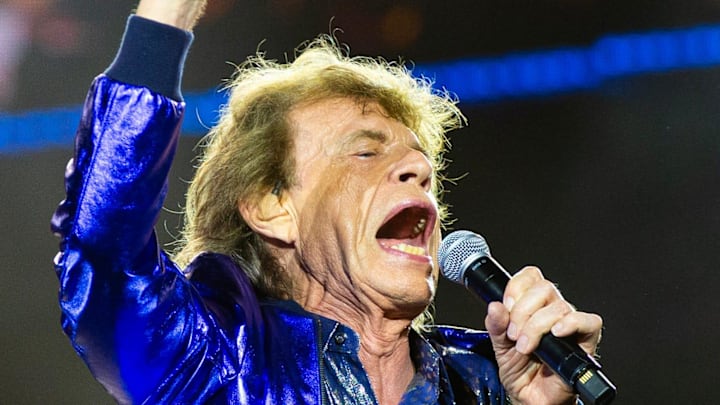
The Rolling Stones – “Mixed Emotions” (1989)
They had their first top ten hit in 1964 (“Time is on My Side”). 25 years later, that had what will probably go down as their final journey into the top 20. That 25-year span is not so impressive in the days of streaming, but it meant something back in the day. Between 1964 and 1989, the Stones placed 30 songs in Billboard’s top 20. Seven were number ones.
“Mixed Emotions” came from Steel Wheels, a reconciliatory project for Mick Jagger and Keith Richards that yielded some of their best work of the 1980s and led to a massive worldwide tour that firmly re-established the Stones as “the greatest rock and roll band in the world.” They were inducted into the RRHOF that year, and though they have continued putting out albums of varying degrees, they never had another major mainstream hit.
Bounus - Jafferson Airplane/Jefferson Starship/Starship
Jefferson Airplane: "White Rabbit" (1967)
Jefferson Starship: "Jane" (1979)
Starship: "It's Not Enough" (1989)
See how confusing this can be?
 Add us as a preferred source on Google