

I’ve been going down a bit of a Rock and Roll Hall of Fame rabbit hole lately. I’m not sure why. Through most of its existence, I’ve been a causal fan. I like that it exists and it is a very cool place to visit. As for its selection criteria …
OK, we can all agree that leaves something to be desired. I think the biggest problem the RRHOF faces isn’t so much about who they let in and who they keep out. It’s their apparent inability to articulate their own standards for admission. That allows for wild shifts in selections that tend to confuse and frustrate anyone who cares about such things.
I know a lot of my rock and roll friends have simply tuned the RRHOF out. It’s meaningless to them. I understand where they are coming from. But here’s the weird thing. They all are very quick to engage in arguments over the institution. They can recite who is in and who is out and why it is all so silly. The intensity and intelligence of their arguments suggest this is not something they have completely tuned out.
The biggest RRHOF snub, bar none
I’m fine with all that. I’ve been known to say that (fill in the sport of your choice) is utterly trivial and then go into a week-long funk when my team blows a game in the closing moments.
Now, the RRHOF rabbit hole has two primary points of entry. You can debate about a particular band’s resume. Should Styx be in? The Monkees? Waylon Jennings?
The other popular discussion thread is “biggest snubs.” I guess that’s just a reconfiguration of the first point, but it has its own mini-universe. Everyone who writes about music has written a biggest snubs article. I have written several biggest snubs articles.
In a very real sense, a place like the RRHOF exists so that fans can debate who the biggest snubs are.
My most recent rabbit hole dive was inspired by one of these articles that was published last month. Consequence – a fine pop culture website with whom I have no beef – put together a list of the top 30 snubs. It was credited to the Consequence staff and they dubbed it the “Worst” snubs.
Then they proceeded to omit what is far and away the single most egregious snub in RRHOF history.
The list was very eclectic. It had Weird Al Yankovic at 30 and John Coltrane at number one. It had pop stars (Britney, Mariah), rappers (De La Soul, Nas), and prog acts that the Hall has traditionally shunned (Bjork, King Crimson).
There were artists who have been dinged for their relatively small output. Bands like Television and the Smiths. There were niche acts like Phish and Fugazi. There was punk – another traditionally dissed genre. Bad Brains was number three on the list.
As a DC native who grew up with punk, I was delighted to see that, though I can’t really agree. Bad Brains was spectacular, but I don’t see how they rank third when bands like the Replacements and Black Flag are not even mentioned. Hell, Greg Ginn should be in the RRHOF based on his founding of SST alone.
This of course, enters into an perilous area. I love the Replacements. If we’re going by my personal favorites, they would be in already. Same goes for J Geils and Little Feat. None are in and I suppose, if I try to be a grown-up, I can understand why.
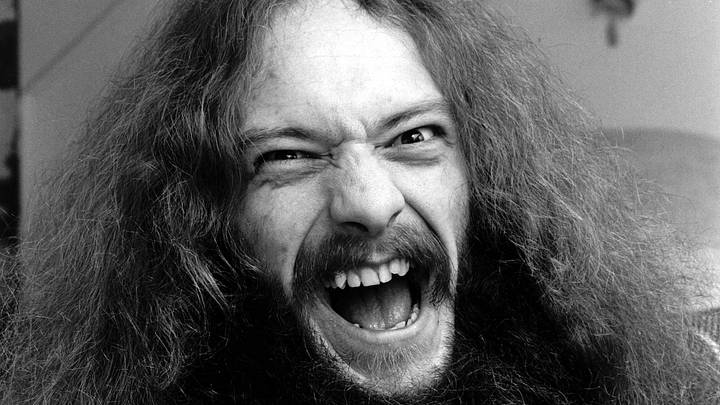
But I cannot for the life of me come up with any rational explanation for why Jethro Tull is not in the Rock and Roll Hall of Fame. It is a snub that simply defies any logic.
The reason that Consequence article triggered me is because they don’t even mention Jethro Tull. It’s as if they have been scrubbed from history.
Jethro Tull has never even been a finalist for the RRHOF. Let that sink in for a moment. The Sir Douglas Quintet was nominated in 2006. The Spinners have been finalists four times and Joe Tex five. I love all those artists but to argue that they are somehow more significant in the history of rock and roll than Tull defies belief.
Jethro Tull, founded in 1967 and still active today, has released 24 studio albums. 16 of them, including all eight released between their 1968 debut and 1975, landed in the top 20. Between 1969 and 1972, they had one number one album and three others in the top five. They had a top ten album in 1968. They had another top ten album in 2022. That’s a 54-year span in case you don’t have your calculator handy.
Now here’s a caveat. Those numbers are from the British charts. There are other bands who had great success in the UK but are not seriously being considered for the RRHOF. Madness released 13 studio albums and 12 made the top 20 in the UK, including a number one in 2023.
But Madness barely registered in the USA. None of their albums cracked the Billboard top 100. They had two top 40 singles in America.
Tull, on the other hand, scored 11 top 20 albums in the USA. Two went to the very top. They were staple on FM-oriented radio in the States from the late ‘60s through at least the mid-‘70s.
If you want to talk about influence and artistry, Tull has an equally formidable resume. It is hard to come up with a band from the early days of rock and roll that incorporated as many different elements into their music.
Band leader Ian Anderson played the flute and often had classical music lurking in his rock. He also had a healthy dollop of Celtic folk. Tull’s albums were constantly trying new things on for size and scoring rather extraordinary success given how truly progressive they were.
They could go from the classic hard rock of Aqualung in 1971 to the remarkable folk rock of Songs From the Wood in 1977, while stopping off for one of the greatest parody albums ever created – Thick as a Brick – in 1973. Thick as a Brick was both a joke and fine album. That was part of what has made Ian Anderson so special.
It is also part of why he is not in the RRHOF.
A great many critics hated Tull. Some hated them because they may have genuinely found the music pretentious. But I suspect more hated them because they always felt Anderson was taking the piss out of a self-important industry.
Nowhere was this more apparent than in the pages of Rolling Stone magazine. Publisher Jann Wenner’s well-documented contempt for Anderson and Tull is the single most obvious reason for their erasure from RRHOF history. For many years, Wenner ran the RRHOF as a members-only club. His friends were admitted. His enemies were left outside.
Being hated by Jann Wenner should be a badge of honor today. Whether he actually hated female musicians and anyone of color – or merely looked on them with a brand of brain-dead disdain – is open to interpretation. Wenner was eventually driven from his seat of power when he opened up about his indefensible opinions.
But that has not opened the door for Tull. And that is sad.
There are two other reasons why Jethro Tull is not in the RRHOF, and neither should matter.
First, Anderson has been an outspoken critic of the Hall. But that criticism has not really been mean-spirited or even wrong-headed. He has merely noted that the RRHOF is an American institution. Tull (named for a little-known British agronomist) is a distinctly British band – despite very solid success on the left side of the Atlantic. Anderson has concluded that Jethro Tull should not be in the RRHOF.
B**ls**t. If the RRHOF wants to have any semblance of authenticity, critical statements by potential honorees should not matter. Anderson saying Tull shouldn’t be in is meaningless when debating their merits.
The other factor is the unfortunate 1989 Grammy fiasco when Jethro Tull was presented with the very first Grammy for Hard Rock/Heavy Metal Performance. They obviously should not have won that award. I will just point out that the fault did not lie with the band, but with the Recording Academy. Still, the band has been stained with that ignominy ever since.
You don’t have to like Jethro Tull. That’s fine. I consider myself only a B-level fan at best. But you can’t tell me that the band who did “Aqualung” and “Cross-Eyed Mary” is not rock and roll enough for you. You can’t tell me that the band that did “Living in the Past” and "Bungle in the Jungle” wasn’t popular enough.
You can’t tell me that the band that did “Thick as a Brick” wasn’t creative enough. And you can’t tell me that a band that placed 11 albums in the top twenty in the USA (along with those 16 in the U.K.) wasn’t big enough in the States to be in the RRHOF.
You can’t tell me that a band that has sold an estimated 60 million albums isn’t somehow significant enough for the RRHOF. And lest you forget, let me say it once again.
They have never even been a finalist. We all perceive snubs based on our own favorites. (I’m all in for Motorhead myself.) And that is going to be subjective. And then there’s Jethro Tull – the most egregious snub of them all by an overwhelming margin.
 Add us as a preferred source on Google