

We’re talking about the Rock and Roll Hall of Fame again today. I am putting it out there right up front because whenever I – or anyone else, for that matter – write about the Rock and Roll Hall of Fame, I can be certain that 41 percent of the comments will be “Who cares?” You can trust me on that number. I’ve done the research.
Maybe the other 59 percent do care. Or the millions of fans who typically weigh in via online voting each year. Or the artists themselves. I don’t know. Most of the complaints I hear are leveled at the inclusion of non-traditional rock acts in something called the Rock and Roll Hall of Fame. I think that’s missing the real problem. The fact is, the RRHOF has 99 problems, but inducting a hip-hop act ain’t one.
Woefully nebulous and inconsistent nomination and induction standards are one of those problems. I scoured the RRHOF website for a definition of what gets you in. There isn’t one. You merely have to have released your first music (major label) at least 25 years ago. After that, if the combined wisdom of the fans and the experts deems you worthy, you are inducted.
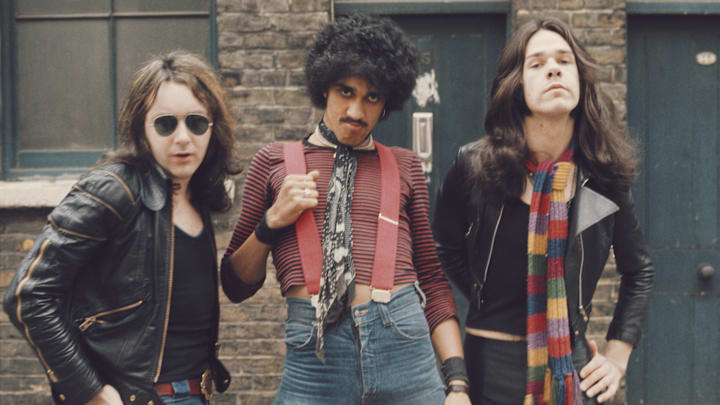
This band should already be in the Rock and Roll Hall of Fame
Artists being considered as Performers – the best-known and biggest group amongst inductees – should have, in the RRHOF’s own words, “created music whose originality, impact and influence has changed the course of rock & roll.”
Later, they do allow that other factors can figure into the selection process, including name recognition, record sales, and iconic achievements. But those commercial considerations theoretically take a back seat to the main pillars of artistry and influence.
That becomes important because debates over who is and isn’t worthy often devolves into a comparison of Top 20 hits and total record sales. If that was all that mattered, we wouldn’t need a panel of experts (and, yes, I do know that some of you are scoffing at the term “experts”) to determine anything. An Excel spreadsheet could do all the work for us.
Let’s illustrate this point with a quick hypothetical. Let’s imagine two bands from the same era. Classic rock – ’70s, ’80s. Similar types of bands, though different in several ways.
Band One released five top-ten studio albums over about a ten-year period. Band Two did the exact same thing. If you include other types of albums – live and greatest hits compilations – then Band Two has an additional four albums in the top ten, while Band One has just one more.
In terms of singles, Band One fares better. Nine top tens compared to just four from Band Two. So, when doing a quick analysis of each band’s RRHOF credentials, perhaps we could boil it down to whether you value albums or singles more highly.
But wait, there’s more. A lot more.
Band One has existed in some form for more than fifty years. However, their last release – either album or single – that charted in the top twenty came out in 1982. Band Two, despite reforming after a long period of inactivity, essentially ceased being a studio band forty years ago, following the death of their primary songwriter and vocalist. Despite that, they have released four top-twenty compilation albums since 1991, with the most recent coming in 2020.
Those data points would seem to suggest that even though they have not put out any new music in a long time, Band Two has a greater impact today than Band One.
Band One does have one enormous, seemingly insurmountable statistic on its side. Globally, they have sold more records. By a factor of almost 25. In other words, Band One has sold a s**t-ton more records. (That's the technical, record-industry term.)
You may wonder how that is possible, given how similar their charting single and album numbers are. You see, there’s something I didn’t tell you. Those numbers come from two different charts. They are both mainstream charts, but Band One’s numbers derive from the Billboard’s USA chart while Band Two’s come from the UK’s OCC records. You can reasonably infer from this that Band One was more popular in the USA, while Band Two fared better in the UK.
That shouldn't necessarily matter when assessing artistry and impact because both countries had been at the forefront of the rock & roll evolution. But the USA is a lot bigger than the UK and markets more effectively. That mostly explains the vast discrepancy in record sales.
Now, if you remember back a few paragraphs, record sales are a contributing factor but not the primary factor in judging a band’s RRHOF worthiness. Artistry and influence – two entirely subjective matters – are what really count. So, can we make the case that Band Two's artistry and influence were significant enough to erase Band One's vast superiority in record sales?
All right, I’m going to end the charade of pretending these bands are hypothetical. You probably never believed me, and you certainly got suspicious as I dove deeper and deeper into specific data.
Band One is Foreigner, who, despite their monster record sales, were not even nominated for induction until more than twenty years after they became eligible. Much to the delight of their many fans, they were inducted last year, the first year in which they were, in fact, nominated.
Band Two is Thin Lizzy. The Irish band also waited many years to even be nominated. Their first and only nomination came in 2020. They were not inducted.
I can almost guarantee that if I asked a hundred rock fans which band displayed greater artistry and had greater influence, the answers would break down almost entirely on geographical lines. If you grew up in the USA, Thin Lizzy was practically a one-hit wonder, and that one hit, “The Boys Are Back In Town,” is a decent bit of rock pop – nothing more.
Maybe you heard the crunching grit of “Jailbreak” a couple of times. You probably never heard the elevated blues of “Whiskey in the Jar,” the oozing funky blues pop of “Waiting for an Alibi,” or the metal pulse of “Killer on the Loose.”
On the flip side, if you grew up in the UK, Foreigner may have just been a power ballad band known for “Waiting for a Girl Like You” and “I Want to Know What Love Is.” Most of their early hard rock hits in the USA – like “Feels Like the First Time” and “Hot Blooded” – were minor hits at best in the UK.
I’ve already made my opinion known on Foreigner. They were a good rock band. A very good rock band. In Lou Gramm, they had a fantastic singer. They put out a lot of good music in the late ‘70s. My only complaint is that back in the day, I could barely distinguish them from at least a half a dozen other quality rock bands that also put out a lot of good music. We used to have a joke about not being able to distinguish between Foreigner and Foghat. (I never claimed it was a good joke.)
The point is, I’m hard-pressed to say that Foreigner was a very influential band. And before you pull it out, I have seen the campaign video that Mark Ronson did last year in an effort to secure Foreigner’s induction. It had a half dozen important rock figures declaring their love for the band. I believe them. They loved the band. A lot of people did. It doesn’t make them influential. The fact that Ronson is Foreigner founder Mick Jones’s son-in-law should sprinkle a grain or two of salt on that campaign.
But I get it. I think they are a classic “Hall of Very Good” caliber band, but if you think they cross the threshold into the Hall of Fame, so be it. The thing is, Thin Lizzy displayed more artistry and had more influence. I know that’s a subjective statement, but I feel pretty confident about it.
Here are my arguments:
ARTISTRY
Musicianship
Both bands had elite rock vocalists. In terms of lead singers, Lou Gramm and Phil Lynott are basically an artistic push. I’d give a slight nod to Brian Downey over Dennis Elliott on drums, primarily due to the variety of styles Downey mastered. But if you prefer the Foreigner drummer, that’s fine.
When you come to the guitar, there’s no comparison. Mick Jones was a solid rock guitar player, and Ian McDonald could do a bit of everything. But Thin Lizzy, at various points, had Eric Bell, Scott Gorham, Brian Robertson, and Gary Moore. They were among greatest guitarists in rock & roll during their era, while Moore routinely makes lists of all-time greats.. In terms of artistry, each was superior to the Foreigner guitarists. In terms of impact...well, more on that in a minute.
Evolution
Thin Lizzy evolved, while Foreigner regressed. The Irish band’s first couple of albums were nothing special. They hinted at the talent within but felt unfocused. From their third album – 1973’s Vagabonds of the Western World - they began cranking out quality disks. Though they hit a commercial peak in the middle with Jailbreak, they continued evolving. Two of their very best albums, Black Rose: A Rock Legend and Renegade, came very late in their career.
Foreigner’s first four albums are excellent rock & roll. The gap between 4 (1981) and Agent Provocateur (1984) resulted in “I Want to Know What Love Is.” It was their biggest commercial success and among their weakest songs, falling into a morass of faceless stadium band power ballads that were entirely indistinguishable from each other. Our earlier joke about Foreigner and Foghat had come to fruition. By the mid-‘80s, Foreigner was virtually anonymous.
Songwriting
Phil Lynott was a better songwriter than Mick Jones and Lou Gramm. I very much like some of the Gramm-Jones early work (“Blue Morning, Blue Day” is epic), but with little variation, they mostly wrote variations on “Hot Blooded.” And it worked very well for a while.
Lynott wrote about a wide range of subjects. He adopted multiple personas in his songwriting. He tried out different styles of music. Brian Robertson helped when he was with the band. Thin Lizzy certainly had their share of sex and drinking songs, but they explored the working classes and the inner life of their subjects as in the hard-rocking “Toughest Street in Town,” which also boasts a sensational Gary Moore solo. When they wrote about women, they weren’t merely objects of lust, as in “Little Girl in Bloom.”
INFLUENCE
Live Albums
Back to albums for a moment, Thin Lizzy released one of the greatest live albums of all time. Two years after Frampton Comes Alive had reignited a popular passion for live double albums, Thin Lizzy arguably released the best one of the decade. To me, Live and Dangerous is a better album than Frampton’s, but even if you disagree, you have to admit that the two are pretty close.
Frampton had a long, successful career, but if we’re being honest, he’s not in the RRHOF without Frampton Comes Alive. In addition, Thin Lizzy released a live double album in 1983, as they were in the process of breaking up, that featured all four of their legendary guitarists.
Twin Guitars
And let’s consider those guitars. You cannot talk about the influence of Thin Lizzy without recognizing that they were one of the first rock bands to perfect the twin guitar sound. At their peak in the mid-‘70s, Gorham and Robertson traded innovative riffs as well as any pair of guitar players in the world.
They weren’t the first to do it, but they were a key step in developing a different guitar-based attack. Thin Lizzy was pointing toward Metallica. Foreigner, by the 1980s, was pointing toward Michael Bolton.
Phil Lynott
Finally, there is Phil Lynott himself. Simply by existing as a bi-racial frontman of a major rock band in the 1970s, Lynott was having a major impact on the way rock & roll would progress. The fact that he was an outstanding songwriter and singer only made that impact more vital.
Though it technically doesn’t count as part of an argument on behalf of Thin Lizzy, Lynott’s 1980 solo album Solo in Soho, recorded with the help of much of Thin Lizzy, is an outstanding album. The title track and “Ode to a Black Man” resonate musically and lyrically to this day.
I didn’t think Foreigner should be in the RRHOF, but I’m really fine with it. They made a lot of music fans happy over the years, and those fans can be justifiably proud of their induction last year. But in every way outside of record sales, Thin Lizzy seems to me to be a more worthy choice.
If the RRHOF is going to truly honor artistry and influence – which they have done by recognizing artists like the Velvet Underground and Frank Zappa – put Thin Lizzy in ASAP. (Then, we can get to Motorhead, Jethro Tull, King Crimson, Iron Maiden, etc.)
More music news and reviews:
 Add us as a preferred source on Google