

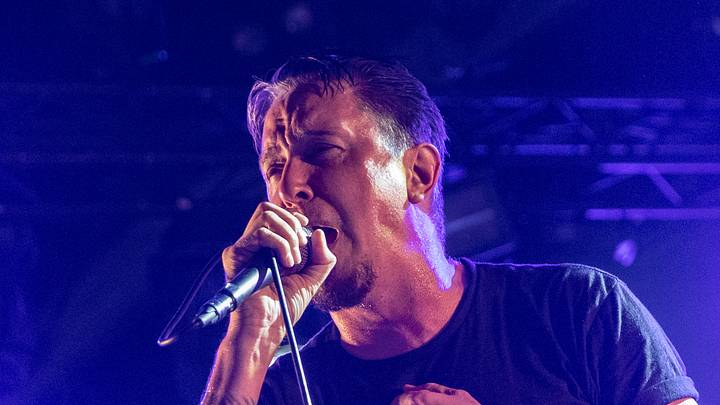
In a podcast interview with Toby Morse back in 2019, Sick of It All frontman Lou Koller had a fascinating character reveal. Morse was discussing “straight edge” – the punk ethos that eschews drugs and alcohol – when Koller admitted that it didn’t exactly describe his lifestyle.
He would have the occasional glass of wine. He went on to explain that as a teen, he didn’t so much like drinking beer as buying it.
It was the getting away with it that appealed to him. The flouting of a societal norm that he considered unfair and oppressive. Once he hit legal drinking age, his interest in beer vanished.
Hardcore loses a legend in Lou Koller
I don’t think I’ve ever heard of a story that captured the mindset of an old-school NYC hardcore punk any better. Koller and his brother – the band’s guitarist Pete – both have a history of going into the crowd and intervening when they see bullying going on at one of their shows.
Koller, in both song and action, always stood up for the little guy, the powerless. But somehow, that thing about the beer is stuck in my head today.
Lou Koller died a few weeks ago, the victim of esophageal cancer. He was 61. For those who ever saw a Sick of It All live performance, this was the only thing that ever could have dimmed his extraordinary energy.
The band came out of Queens in the late 1980s, a kind of natural descendant of Agnostic Front. They bridged the gap between hardcore punk and traditional metal, helping, along with plenty of other bands, to evolve metal into its varied offshoots.
Were they grindcore? Thrash? How did they figure into nu-metal? Those are all questions that fans of a certain type will debate endlessly. I won’t try to label them. The Koller boys had two older brothers who schooled them on the early metal gods – Deep Purple and Iron Maiden, among others.
Lou Koller said it all changed for him when he was first introduced to the Plasmatics, another explosive NYC band that existed somewhere between punk and metal, tilting in the hardcore punk direction.
As they were just developing, they toured in support of both Exodus and Bad Brains, further establishing the thrash/hardcore nexus. Korn opened for them when they were just starting. The Koller boys helped bring hardcore to the Warped Tour in the ‘90s.
They had the guitars and screaming vocals of thrash metal. Their attitude and brief song length were punk. They were all energy, all the time. And they always stood up against the oppressors.
Their first full studio release, Blood, Sweat and No Tears, featured a bludgeoning juggernaut called “Clobberin’ Time.” The song initially appeared on their debut EP in 1987. For the new album, they got iconic rapper KRS-One to give them an intro.
The final track, “Injustice System,” opens with Simon Oakland’s famous speech from West Side Story (1961) – the one where the cop tells the gang members, “I got a badge. What do you got?” Then, a two-minute pulsating takedown of the illusion of freedom and democracy.
Thirty years later, on their final album, Wake the Sleeping Dragon!, that righteous anger about racism and oppression is no less potent on “Robert Moses Was a Racist.”
I won’t dive into the history of the manner in which New York City was developed, beyond saying that Sick of It All had a very potent way of stating their view of how we have ended up where we are today.
Like so many early sensations, Sick of It All was forever riding the tension of evolving vs remaining the same. Their best-known albums were the early ones. The debut eventually helped them land a deal with EastWest Records, an imprint of Atlantic. In the mid-‘90s, Scratch the Surface and Built to Last seemed to have them on the brink of more mainstream success.
They moved to Michael Burkett’s Fat Wreck Chords for their next release, and it was underwhelming. But the follow-up, 2000’s Yours Truly, did find them moving off of that straight hardcore vibe into slightly more melodic material. Koller proved he could both scream and sing on songs like “America,” which could be a muscled-up Offspring tune, or “Souvenir,” which does the same for Green Day.
But at the same time, they had not moved all that far from hardcore. “Hello Pricks” and “Disco Sucks F**k Everything” made sure of that.
Yours Truly is Sick of It All’s best album – though I am not prepared to throw down with the fans who choose the earlier albums. But what may have made them as great as they were was that the delta between their best and their worst was far narrower than it is for most hardcore bands.
Their output slowed as they got older and began giving way to newer bands, but they never released anything that undermined what they stood for.
Playing the Persistence Tour in Europe in 2015, Sick of It All found themselves headlining shows that featured major up-and-comers like Turnstile. Koller admitted that much of the audience was there for the new acts, but those new acts were grateful to be supporting legends like Sick of It All.
Lou Koller never thought his band would last, let alone provide him with a livelihood for his entire life. He just kept turning in an honest day’s work as a hardcore musician and left the world with plenty of good music and plenty of great memories.
 Add us as a preferred source on Google