

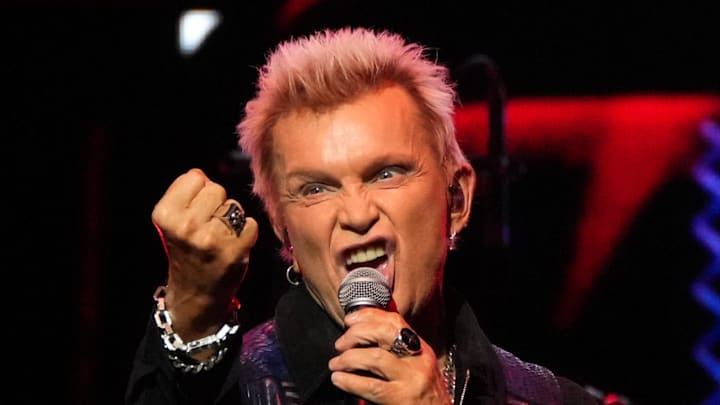
The 2026 class of the Rock and Roll Hall of Fame was announced on Monday night. Of the seventeen finalists up for induction as performers, Hall voters selected eight inductees, up from the seven they chose last year.
They also selected five artists in the Musical Influence category after recognizing just two last year. And there were four non-performers slated for induction in the Musical Excellence category after recognizing three last year.
Does the uptick in total inductees suggest the Hall is broadening – or perhaps lowering – its standards? Not really. Not this year. This year seems to be about something entirely different.
5 main takeaways from this year's Rock & Roll Hall of Fame selections
I may have voted a little bit differently, but this year the Hall got a lot of things right across all of its induction categories. There may have been a few mild surprises, but there were no outright head scratchers. That is not always the case with the institution that music fans like to argue about more than any other.
Past wrongs being righted
“Today, I settle all family business…” Michael Corleone said it to his soon-to-be-dead brother-in-law Carlo in The Godfather back in 1972, but I have a feeling Hall voters had that very thing in mind this year. At least three – and perhaps four – of this year's inductees would appear to be no-brainers for an organization designed to honor excellence in rock and roll.
All had been previously nominated without being chosen at least once in the past. This was the year to take care of a lot of old business.
If we are leaving personal grudge and politics out of it, there is no way that Iron Maiden and the Joy Division/New Order tandem were not already in. I think the same applies to Oasis, though I suppose you could make a better argument against them if you care to. And Billy Idol strikes me as trailing a half step behind those three bands. All will be inducted this year, as it should be.
The desire to cast a wide net remains
Despite inducting four fairly obvious rock & rollers, Hall voters continued to show that they define “Rock and Roll Hall of Fame” very broadly. Each year, it seems as if they redefine just how far afield a performer can drift from traditional rock and still be recognized.
This year, another hip hop band (Wu-Tang Clan), a jazz/soul hybrid innovator (Sade), and one of the greatest soul singers of the last half of the 20th century (Luther Vandross) all received recognition. And I have no problem with any of them.
I had written previously that one of this year’s finalists – Mariah Carey – may be the acid test for just how far you can move away from rock and still get into the Hall of Fame. This was the third straight year Carey was nominated, and once again, she was denied admission.
Mariah Carey is among the most successful recording artists of all time, but she has almost nothing to do with what most people consider rock and roll. So the RRHOF will continue to recognize performers outside the traditional confines of the genre, but the line for just how far they will go seems to exist somewhere between Sade and Mariah.
Women were almost shut out of the performer category this year
Mariah is representative of another obvious trend this year. Of the eight honorees, Sade was the only woman. Mariah joined Lauryn Hill, Melissa Etheridge, Pink, and Shakira on the outside looking in. Personally, I would have voted for Pink over Phil Collins, who became the 29th performer to be inducted more than once. He was already in as a member of Genesis, and now he will go in for his undeniably successful solo career.
Despite their complete dominance of pop music today, women are experiencing a mini-drought in RRHOF voting. Last year, Cindy Lauper was the only female solo artist inducted. (Meg White got in as part of the White Stripes.)
At least two female artists have been inducted every year since 2021, and usually three such acts. I expect this will reverse again within the next few years, and artists like Pink and Hill will get their recognition.
The fan vote is largely meaningless
We already knew this, but it was once again confirmed. Last year, Phish won the fan voting but was not inducted. This year, the honor went to New Edition, who were the only band to top one million in fan voting. New Edition was not selected. Nor were third place Pink, fourth place Shakira, or sixth place INXS.
At the other end of the spectrum, British artists Oasis and JD/NO finished 15th and 16th, respectively, and were selected. Personally, I think this worked out pretty well, but it does pose a problem for the Hall. If fan voting is so obviously insignificant, why will fans continue to engage? I wonder if this will lead to tweaks that give a little more value to fan voting in the future.
The righting of past wrongs extended beyond the standard performer category
Among the ten individuals chosen for recognition in the Musical Influence, Musical Excellence, and Non-Performer categories, there were an awful lot of names who really should have been recognized years ago.
How is it that Fela Kuti and Gram Parsons were not already in? Neither Afrobeats nor country rock looks the same without them. MC Lyte and Queen Latifah – who helped establish that women could rap – also probably should have been recognized by now. Rick Rubin and Ed Sullivan (who was chosen for the Ahmet Ertegun Non-performer Award) seem like no-brainers to me.
On the whole, this year feels like a bit of a reset. Without abandoning the wide net principle, the Hall cleaned up some old business. We all still have our personal causes (mine are Motorhead and Little Feat), but I think 2026 will help clear the path for continued expansion in the years to come.
Now, we can turn our attention to the truly vital questions – like what exactly is going to happen when Oasis and Iron Maiden finally get their night to shine in Cleveland?
 Add us as a preferred source on Google