

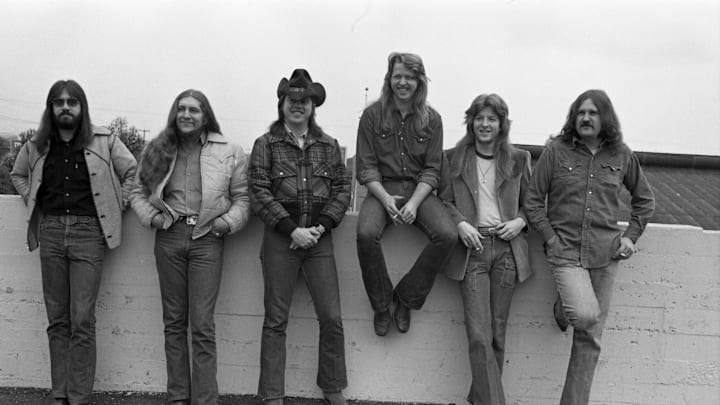
In an industry that invents names for everything – from melodic death metal to Kawaiicore – it is perhaps a little odd that there is no universally catchy title for these. They are usually just referred to as hybrid albums, so called because they feature tracks that have been recorded in a traditional studio setting alongside tracks that have been pulled from live concert performances.
It is not uncommon for such oddities to be the result of a mistake. Not enough quality studio material for a complete album. A screw-up at the live taping which required some manipulation back in the confines of the studio. Every so often, they represent a more intentional attempt to capture a band’s craftsmanship in the studio and the raucous energy of their live set.
But usually they do not work all that well. When you pop on a disk, chances are you’re in the mood for one or the other. Not the hybrid.
Three forgotten classic rock hybrids that are worth your time
Of course there are exceptions. There are always exceptions.
The best known may be the one born out of tragedy. The Allman Brothers had already begun recording their third studio album, Brothers and Sisters, when guitarist extraordinaire Duane Allman died in a motorcycle accident.
Since they had recently released a breakthrough live album, At Fillmore East, the band decided to supplement the studio selections they did have with some of the outstanding music that was not used on At Fillmore East. The result is both amazing and incongruous.
Cream tried it with Wheels of Fire, with equally mixed results. ZZ Top had Fandango. The Moody Blues – Caught Live + 5. Seems like everyone was trying but no one was really cracking the code. That might be because there is no code to crack. Maybe the two worlds should never meet.
And then there have been plenty of albums that tossed a live track into an otherwise totally studio-bound album.
John Prine could not get a decent version of his song “Dear Abby” cut in the studio, so he just used a live version smack dab in the middle of Sweet Revenge. Maybe he got the idea from Neil Young, who pulled the same trick with “The Needle and the Damage Done” on Harvest one year earlier.
And let’s not even start in on Frank Zappa.
Instead, let’s take a quick look at three albums that came pretty darn close to nailing the format. They had multiple strong live tracks as well as multiple strong studio cuts. Nothing was just tossed into the mix to fill out a track list. Each comes from the classic era of classic rock.
Two were intentional hybrids, the other the result of an accident. Two were from killer bands who are largely forgotten today. The third is from an innovator who is still remembered but has never gotten its proper recognition.
In other words, they’re all kind of different versions or the same oddball thing. And they are all worth the attention of rock and roll fans.
Rock and Roll Music by the Frost (1969)
We’ll take the most obscure and most problematic first. (That’s not an editorial decision – we’re going chronologically.) The Frost were a undeniable kick-ass outfit from Detroit, briefly on a par with Detroit legend MC5. They only lasted for a few years at the end of the ‘60s, but those were a few very good years.
Dick Wagner, a guitar player who would have a long career playing with some of rock & roll’s greatest talents, formed the Frost out of the remains of several earlier bands. He had Don Hartman on second guitar and Bobby Rigg on drums. When he added Gordy Garris on bass, the Frost took off.
They kicked things off with Frost Music, a studio album that took the Motor City by storm. Then they attempted to replicate the success of MC5 by releasing a live album. Rock and Roll Music was recorded at the Grande Ballroom in 1969. But it wasn’t recorded all that well. The Frost never really had the kind of professional management that would lead to success.
So they went into the studio and did some sweetening and tweaking and downright rerecording. The result is a weird but mostly wonderful mess. The title track kicks things off with great live energy. Then we get a trio of much more studio-flavored bluesy rock tunes in the BTO vein before swinging back for some outright sensational live tracks at the end.
Riggs’ machine gun drumming and Wagner’s shredding propel “Help Me, Baby.” Then Hartman gets the spotlight on his original “Donny’s Blues,” complete with harmonica. They end with a pulsing take on “We’ve Got to Get Out of This Place,” with a three-minute drum solo from Rigg.
The Frost would never break out of Detroit and would split after one more album. But for fans of early, hard-charging blues rock, their hybrid album will always have a certain charm.
Where We All Belong by the Marshall Tucker Band (1974)
The boys from Spartanburg had only released their debut album a year before when they took the bold step of putting out a double hybrid. The first disk featured studio tracks that straddled the line between the nascent country rock movement and a more experimental, looser, jazzier vibe. “This Ol’ Cowboy” is about as breezy as it gets, the closest thing 1974 saw to a kind of country jazz,
“Where a Country Boy Belongs” veers into the bluesier end of country with some slide guitar from Elvin Bishop, while “How Can I Slow Down” spices things up with horns. There are fiddles (courtesy of Charlie Daniels on a few tracks), piano and pedal steel guitars that run through the eclectic collection of studio cuts.
Then you put on the second album and you hear cheering as an emcee intros the band. Front man Doug Gray promises to keep the house shaking, and they do just that with a rollicking “Ramblin’ on My Mind.” And they just crank it up from there with the ultra-jam of “Everyday (I Have the Blues)” before closing with the song that opened their debut “Take the Highway.”
Marshall Tucker have dealt with tragedy and changing tastes over the years, but as of 2026, they are still cranking out a wide-ranging blend of rock and roll, rooted in country but reaching out in all directions, just like they did on their 1974 hybrid gem.
Out of Their Skulls by the Pirates (1977)
Now we’re talking some serious blues rock, brought to you by the legendary, exemplary, and all-around revolutionary Mick Green, one of the greatest rock and roll guitar players there ever was. The Pirates began as the backing band for Frederick Heath, better known to early devotees of rock as Johnny Kidd.
Johnny Kidd and the Pirates blasted their way through the London club scene several years before the Beatles or the Stones were even dreaming of stardom. They were the first Brits to make the American blues of Bo Diddley a thing across the pond.
Kidd died tragically in the mid-1960s, just as the invasion was at its peak. The Pirates went their separate ways. But they were not forgotten. And when some of their disciples began having their own success in the 1970s, it brought the Pirates back together. Out of Their Skulls was the reintroduction.
Side one is live. Recorded at London’s Nashville Rooms (where Elvis Costello was playing regularly at the time), it features killer covers of standards like “Peter Gunn,” “Milk Cow Blues,” and the biggest hit of the Johnny Kidd era, “Shakin’ All Over.”
It’s largely Green’s show, but it would be a major oversight to ignore the brilliant rhythm section provided by drummer Frank Farley and bassist Johnny Spence, who also handles most of the vocals.
The energy barely dips when you flip over to the studio side. Beginning with covers of “Drinkin’ Wine Spo’ De’ O’ D” and “Do the Dog,” it soon moves into some older Green originals like the chugging “Don’t München It” and the sensational “Gibson Martin Fender,” one of the great odes to guitars, from one of the greatest musicians to ever play one.
 Add us as a preferred source on Google