

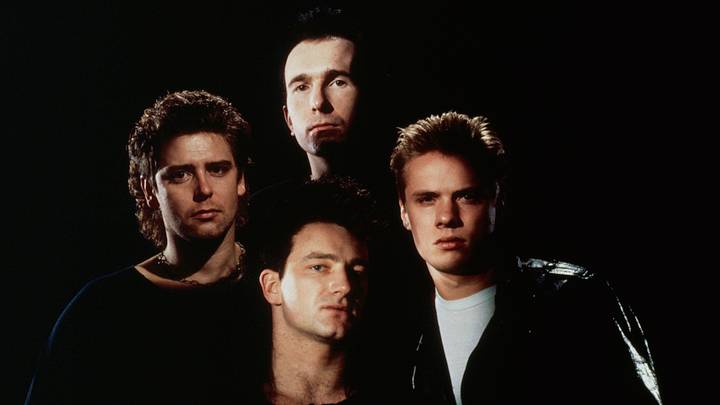
U2 was three albums into their career when they decided to do something truly different. Instead of the hard-rock brilliance of arguably the band's second-best record, War, the Irish lads wanted more of an arty feel for their fourth album, The Unforgettable Fire.
The album would produce what remains one of the most popular songs from the legendary band, "Pride (In the Name of Love)," but that single doesn't imply how the rest of the record would sound.
Ultimately, The Unforgettable Fire is one of the more forgettable records by casual fans because of what came before and after. War was the band's coming-of-age record: Loud, aggressive, and confident. The album after The Unforgettable Fire was The Joshua Tree, the album that would make U2 the biggest band in the world for some time to follow.
U2's The Unforgettable Fire ranks among the group's best
Fire should not be easily dismissed, though. Not wanting to get pigeonholed as an arena rock band that tilted toward hard rock, the group understood it could be so much more. They wanted to control their own narrative, and they wanted to explore the preset parameters of what being a true rock band in the early 1980s meant.
It helped to harken back to the 1970s, the decade that most influenced U2. But they didn't want to remake the Ramones. The band wanted to stretch its boundaries by not being afraid to be nuanced, with art rock not completely removed.
To help in their quest, U2 hired Brian Eno and Daniel Lanois to produce the record. Experimentation was heavy, almost to the point of detracting from fundamental recording, and that led to "Pride (In the Name of Love)," for instance, being re-recorded.
Most of the material has been written, composed, and recorded at Slane Castle in County Meath, followed by some additional touches and mixing at Windmill Lane in Dublin. That was where the band had previously recorded, but the studio was small.
Instead, the owner of Slane Castle, Lord Henry Mountcharles, offered the band the use of the castle at half-rice for renting, and they could live there while making the record. The castle's ballroom was built initially for music to be played and had a domed ceiling. U2 was intrigued by this, especially with how they wanted to approach the artiness of the new album.
It paid off. While the recording aspect became a bit of a crunch and led to a couple of the songs not being fully realized, overall, the atmospheric aspects worked perfectly. The Unforgettable Fire wasn't meant to sell millions of units, but to change how the world saw the band.
Just as importantly, the sonic success allowed the band to create The Joshua Tree, an album that would combine the elements of the band's first three albums and also its fourth record.
While "Pride (In the Name of Love)" became a massive worldwide hit, other tracks from the album were just as strong. "A Sort of Homecoming" begins the tracklist and immediately lets the listener know this U2 album won't be the same as others. There is more space, more texture, but it's still completely rock.
"Bad" is slightly more straightforward and has become a longtime fan favorite live. The song is a great example of how much depth is on The Unforgettable Fire.
U2's entire catalog offers elite depth, and their latest album, Carnaval de Luz, is quite good too. But their best might be The Joshua Tree and War, and The Unforgettable Fire should not be discounted as their third-best, ahead of albums like Achtung Baby.
 Add us as a preferred source on Google