

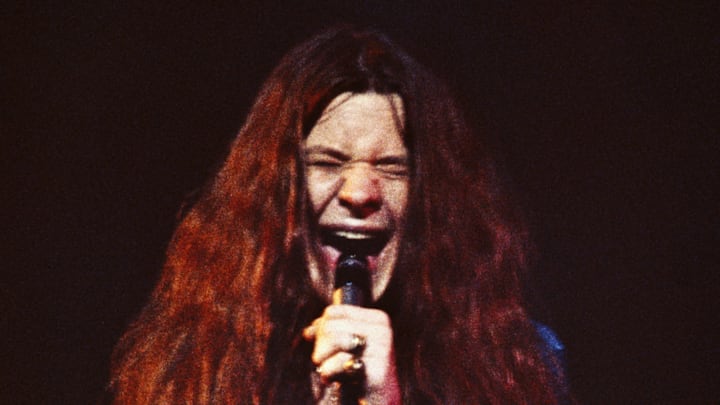
Steve Wright is at it again. The BBC music writer has been publishing a series of rock & roll “best” lists and stirring up plenty of conversation. His most recent list – best rock & roll frontwomen – is no exception.
Fronting a band is not simply about having a great voice. That may be the single most important trait in an all-time great, but other qualities go into the mix. On the male side of this equation, I think I could come up with a lot of vocalists with better voices than Mick Jagger, but precious were better at standing in front of a band and creating electricity.
With women, your parameters can be a little trickier. For instance, Wright does not include Linda Ronstadt in his countdown of the top 25. That’s entirely fair because Ronstadt was primarily a solo act. She only “fronted” a band in her earliest days with the Stone Poneys, and even with them, she was more of an old school “girl singer” than a true frontwoman.
Rearranging the greatest frontwoman list for rock & roll
Nor will we quibble over genre-based exclusions. I’d have Karen Carpenter – the purest voice in pop music – on virtually any list, but I can certainly understand that her brand of pop doesn’t have much to do with the singers Wright did choose. Besides, Carpenter hated the whole idea of being in front of anyone which is why her brother had to drag her out from behind her drum kit.
Still, there are some unexplainable exclusions on Wright’s list. There are also plenty of places I would shift his rankings to suit my own tastes. Let’s begin with those.
Ranked too high
Understand, these are all outstanding performers. I just think Wright has them ahead of other more deserving frontwomen.
Grace Slick, the Jefferson family of bands
Slick was a fabulous singer and she had a great presence on stage. I think 12 is a bit too high based on the fact that she was not Jefferson Airplane’s only vocalist. She shared that role with Marty Balin throughout a lot of their history. “Somebody to Love” and “White Rabbit” are iconic enough to earn her a spot on the list, but I’d slide her back a few spots.
Courtney Love, Hole
I get how important Courtney Love was, and I don’t mark her down for her association with Kurt Cobain. In fact, I think that may legitimately enhance her standing because it proved that a frontwoman could occupy similar territory as the leading rock frontman of his day. I just think putting her at number 4 is way too high. I would have about a dozen others ahead of her.
Christine McVie, Fleetwood Mac
This one is tricky. McVie’s “perfect” voice (Perfect was her name before she married John McVie) was essential to one of the biggest bands of the 1970s. She was beloved by everyone and since she predated Stevie Nicks and Lindsay Buckingham, FM fans consider her far more authentic.
But can you really be the third greatest frontwoman of all time when the consensus greatest frontwoman of all time was usually standing center stage while you sat behind your keyboards? McVie raises the question more than anyone else on this list – what exactly is a frontwoman? I can’t see having her this high.
Ranked too low
Delores O’Riodan, Cranberries
Wright has her at 18. Of all the singers on this list, there are only two or three whose voices are as instantly recognizable. That earns her a higher ranking on my list.
Ann Wilson, Heart
I think you could make the case that Ann Wilson had the greatest voice of any woman who continually fronted a rock band throughout her career without branching off into a lot of solo work. Even if she isn’t the greatest, she is better than number 10.
Janis Joplin, Big Brother and the Holding Company
To me – and many people my age – Joplin is the greatest female rock singer of all time. Maybe the greatest regardless of gender. Wright has her at number five and that may be fair. Unlike what I just said about Ann Wilson, Joplin did go solo fairly early.
And, tragically, she died far too young, robbing the world of who knows how many great rock and roll moments. Given that, maybe five is OK. But I can’t do a list like this with Janis any lower than two.
(In case you haven’t figured it out by now, Stevie Nicks topped Wright’s list. Based on what I have already said about Grace Slick sharing vocals, I should probably mark Nicks down a bit for sharing leads with not one, but two other singers. Still, I will not object to putting her in the top spot.)
And where were…?
Kathleen Hanna, Bikini Kill
I’m glad punk rockers were repped on Wright’s list by Ari Up and Poly Styrene. Styrene, especially, is an underappreciated revolutionary. I’m throwing in another punk legend. Hanna virtually invented riot grrrls and her talent and influence as a band leader are vital on the harder-edged side of women in rock & roll.
Ronnie Spector, the Ronettes
Maybe the most obvious omission on Wright’s list is Tina Turner. She would absolutely be in the top ten on my own personal list. I will allow for some leeway regarding Turner since she was more famous and more vital as a solo act than as the vocalist in the Ike & Tina Turner Revue. But Spector, who brought a never-before seen attitude – and spectacular vocal chops – to the history of women in rock, has to have a high-ranking spot on any such list.
Lizzy Hale, Halestorm
I have plenty of other singers who could form an alternate list – from Suzi Quatro to PJ Harvey to Ellie Rowsell. But I think metal needs at least one representative on this list and Hale would be my choice. I don’t mean to suggest this is a token recognition. Listen to her and you will hear walls being knocked down.
 Add us as a preferred source on Google