

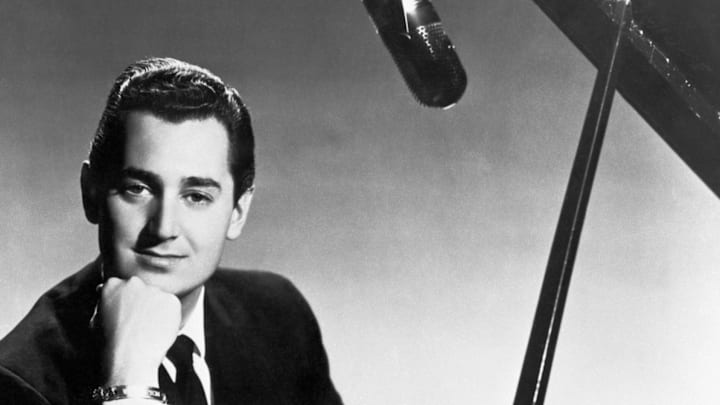
If you’re of a certain age – my age, that is – your first impressions of Neil Sedaka did not do him the least bit of justice. It was 1975. Sedaka was more than ten years removed from his last trip into the Top 40 on the Billboard chart.
The song that returned him to prominence, “Laughter in the Rain,” was hardly the thing to appeal to a 12-year-old wannabe headbanger who was just discovering Black Sabbath and Led Zeppelin.
It would be many years – decades even – before I revisited the career of Neil Sedaka. That is when I began to understand just what a vital talent he was in rock and roll’s formative years.
Neil Sedaka was one of music's underrated stars until his death
Sedaka died on Friday at the age of 86. He hadn’t recorded a hit record in more than 40 years and had not released anything for mainstream pop consumption in almost as long. But amongst devotees of early American pop rock, and amongst songwriters of all stripes, he remained a giant.
He had a melodic sensibility that rivalled the giants of the field – McCartney, Simon, and Elton John. Indeed, he was a major influence on almost all of the great pop songwriters who succeeded him in the final decades of the 20th century.
He was a prodigy. He attended Juilliard in his teen years and was recognized as a gifted classical pianist. It was pop music that grabbed his attention. He met his neighbor, Howard Greenfield, when they were both young and formed one of the most successful partnerships in the world of pre-invasion pop music.
Greenfield served as Bernie Taupin to Sedaka’s Elton John. Greenfield’s lyrics and Sedaka’s melodies landed them gigs as professional songwriters, and soon Sedaka had launched his own solo career, scoring big with many of their original compositions.
Sedaka was not yet 20 when Connie Francis took “Stupid Cupid” into the top twenty. Then, on August 11, 1962, he climbed to the top of the mountain as a solo act. “Breaking Up Is Hard to Do” may just be the definitive pre-invasion Doo Wop song. It is insanely tuneful. That matches the joy of performance. It is the happiest song about a potential break-up that has ever been recorded.
Neil Sedaka, barely out of his teens himself, wrote the perfect teen anthem for a pre-‘60s ethos.
Then, of course, came the invasion. Sedaka’s final 1960s top 40 hit came the following year with “Bad Girl.” But while Brian Wilson and the Beach Boys were able to meet the challenge of Beatlemania and up their game, Sedaka drifted into obscurity like so many other major artists.
That may have been the end of his story, and had it ended there, Sedaka would still be a major force in American pop music. He and Greenfield wrote big hits like “Happy Birthday Sweet Sixteen” and “Calendar Girl,” which Sedaka recorded himself, as well as songs that became hits for others like Francis’ “Where the Boys Are” and “Frankie,” and the late ‘60s Fifth Dimension song “Working on a Groovy Thing,” with lyrics by Roger Atkins.
Then came his second wave. It was largely due to the intervention of another songwriting piano player who had been inspired by Sedaka, and who had gone on to become the biggest recording artist in the world in the early 1970s. Elton John signed Sedaka to his new record label, and “Laughter in the Rain” (with lyrics by Phil Cody) came out of nowhere to hit the top of the charts in early 1975.
Unfortunately, it’s just not a very good song. Sedaka was never much of a singer, so there isn’t a lot to recommend it. Later that year, the Captain & Tennille's recording of another Sedaka-Greenfield composition, “Love Will Keep Us Together,” went nuclear. It finished the year as Billboard’s number one song of 1975. “Laughter in the Rain” finished ninth.
As Toni Tennille sang in the fadeout of “Love Will Keep Us Together,” “Sedaka is back.”
“Love Will Keep Us Together” is somewhat better than “Laughter in the Rain.” At least it has a syncopated groove.
At the end of 1975, Sedaka released his final number one song – the best thing he had done since “Breaking Up is Hard to Do.” Elton John sings with him on “Bad Blood” (again with lyrics by Phil Cody), and the result is fascinating.
Sedaka’s melody walks a tightrope. It has just enough of an easy groove to prevent it from sounding chintzy, and the addition of Elton actually gives it a harder rock feel than anything Sedaka had ever done.
Mind you, it’s not “hard” by any means. Just “harder.” But in the pop wasteland that was 1975, it’s a pretty good tune.
Sedaka did not have more big hits, but he remained a figure in the music scene. He continued performing and was idolized by many of the songwriters who learned from his early pop excursions into syncopated teen fantasy.
In 1983, he was inducted into the Songwriters Hall of Fame, one of the first pop music writers from the rock era to be so honored. He went in the same year as Stevie Wonder. One year after Bob Dylan and Paul Simon. A few years before the likes of Neil Diamond, Lennon, McCartney, and his childhood friend, Carole King.
I didn’t like “Laughter in the Rain” when I first heard it. Still don’t. But I’m glad I grew out of that 12-year-old cocksure arrogance because there are an awful lot of other Neil Sedaka songs that I still enjoy listening to so many years later.
 Add us as a preferred source on Google