

Paul McGuinness of BBC Music took on a Sisyphean task this week. I mean, what kind of audacity does it take to label an essay “The 21 greatest cover versions of all time?” There’s no way to do it. I think it is probably harder than simply trying to pick the 21 greatest songs of all time because covers open up plenty of new avenues for critique.
Was the new version transformative or innovative? Did it surpass the original? Does it have to be considered one of the best? So many questions. I don’t need to address any of those things when I declare that David Essex’s “Rock On” is the coolest song of the 1970s. I just have to dig the song.
“Rock On” fell victim to one of the worst covers of all time when soap opera heartthrob Michael Damian recorded his own soulless version at the end of the 1980s. Of course, it went to number one. Fortunately, we’re not talking about bad covers today.
A bakers dozen of covers that should have been on the BBC best covers list
Except – well – I lied. I am going to talk, very briefly, about a single bad cover. Because I can match McGuinness’ audacity opinion for opinion. And because this particular song inspired the following list. McGuinness included it on his “greatest” list, at number ten no less. And I’m sorry if you love it.
I obviously don’t, despite the fact that, like Michael Damian’s “Rock On,” it went to number one on the Billboard chart.
George Harrison’s “Got My Mind Set on You” is not a good song. It’s catchy, true. It’s also repetitive to a degree usually only found in a Police outro. It goes nowhere. It says nothing. It is like so many Jeff Lynne-produced singles – genius hooks in search of a fully coherent song.
I’ve always thought the bizarro-world Beauty and the Beast video, with its dancing books and singing taxidermies, helped it get to the top of the charts.
What makes the Harrison cover so annoying is that James Ray’s 1962 original is so much better. It isn’t as mindlessly catchy. I’ll grant you that. But there is more heart and soul in the ‘62 version’s opening horns than in Harrison’s entire number.
Harrison and Lynne seem to be going out of their way to dumb down the song. Rudy Clark’s composition, though somewhat repetitive, has more going on than that mindless chorus and redundant verse. Ray sang it as written, while Harrison stripped out all the nuance to create a pop earworm.
I should say that I wholeheartedly agree with many of McGuinness’ other choices – though I do tend to side with my colleague Lee Vowell over the rankings at the top of the list. But obviously, I am so bothered by that Harrison selection that I will now offer 13 other covers that are light years better. Any one of them could have supplanted it.
In chronological order…
“My Little Red Book” by Love (1966)
When Manfred Mann did “My Little Red Book” in 1965, it was kind of sleepy and psychedelic. It exists in that middle ground between old-style crooning and new-style rock and roll. As such, it’s perfectly OK. I mean, no one could ruin a Burt Bacharach/Hal David song.
But Love’s Arthur Lee could transform it into something new. The pulsing, insistent piano and bass immediately say we are not sleepy anymore. Lee’s vocals support that. He has attitude and anger. The song, in turn, is a genuine banger.
“Proud Mary” by Ike and Tina Turner (1970)
CCR delivers the goods on the original. John Fogerty could do swamp rock with the best of them. But Ike and Tina take it up to eleven. On Workin’ Together, their classic “nice and rough” treatment became an instant classic.
“Black Magic Woman” by Santana (1970)
Peter Green wrote “Black Magic Woman” for Fleetwood Mac in 1968. This is back when they were a blues band, and his version dips into the psychedelic blues that was in vogue late in the decade. There’s no denying Green’s guitar work, but the song has a halting quality that undermines its effect.
Nothing is halting about the way Carlos Santana delivers it a couple of years later. Gregg Rolie’s vocals are far more seductive, and that guitar is sublime.
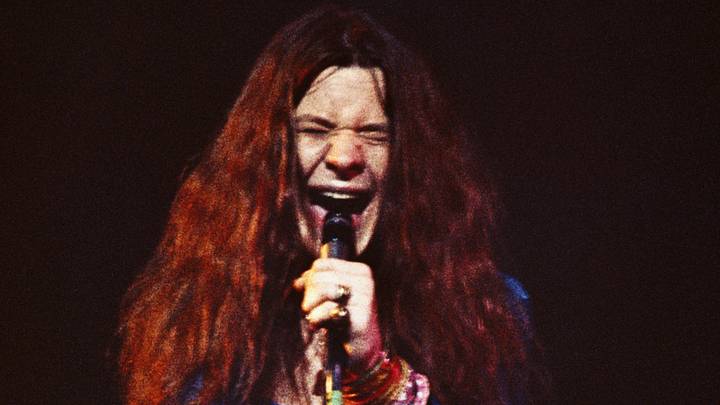
“Me and Bobby McGee” by Janis Joplin (1971)
Three major artists had already recorded Kris Kristofferson’s tale of lost love by the time Janis Joplin got hold of it. Roger Miller, Kenny Rogers, and Gordon Lightfoot had tried with varying degrees of success to give it wistful country/folk readings. Kristofferson had done his own version, but as everyone knows, Kris couldn’t sing back then.
Janis Joplin recorded it shortly before her death. It was released posthumously. It erased every other version – before and since – from memory. She gives it a much harder blues-rock edge, with both the tenderness and passion at the max. It is a stunning vocal performance and probably one of the five greatest covers ever recorded.
“Drift Away” by Dobie Gray (1973)
John Henry Kurtz did a nice country version of Mentor Williams' tune in 1972. I only learned recently that Mike Berry also recorded a fuzzed-up version that same year.
Gray, a veteran who had gone eight years without a hit by 1973, imbues it with an aching beauty that is simply irresistible. The production suits his gentle soulful delivery, but this is clearly a case where it all comes down to the vocals. Ray Charles and Mick Jagger have both recorded the song. None can touch Dobie.
“Angel From Montgomery” by Bonnie Raitt (1974)
One of the astonishing things about John Prine is that he wrote a song whose opening line, “I am an old woman,” was penned when he was barely into his 20s. And as a composition, he positively nails it.
The one thing he could not do was actually be an old woman. Bonnie Raitt was not old either when she first sang this. But she was not merely a woman. She was a woman with a sensational voice.
The blues touches she drops into the song are masterful. And she has continued singing this song as she herself has aged. That has led to new chapters for one of the most achingly beautiful songs America produced in the 1970s.
“Twisted” by Joni Mitchell (1974)
The closing track on Mitchell’s brilliant Court and Spark album a quirky Annie Ross vocalese number from the early 1950s. Ross’ version has a sweet samba beat and a deadpan delivery that makes it a minor pleasure.
Mitchell’s jazz proclivities give this a gonzo reading that delves far more deeply into the madness. Where Ross remains detached, Mitchell is truly twisted.
“I Love Rock and Roll” by Joan Jett (1981)
The Arrows had some success recording with Mickie Most, producing some glam rock hits in the UK in the mid-‘70s. “I Love Rock ‘n’ Roll” was a nice, catchy tune that the Arrows gave a fairly standard rock gloss.
Joan Jett came along six years later and heightened everything. The guitars are sharper. The drums hit harder. And Jett’s sneering vocals drip passionate venom. The song came to life.
“I Will Survive” by Cake (1996)
Up until now, I would argue that every cover I have discussed is flat-out better than the original version. I am not going to say that here. Gloria Gaynor cranked out a first-rate disco version of the Dino Fekaris-Freddie Perren song in 1978.
What Cake did a couple of decades later was update the song for the grunge era. They maintained the easy swing rhythm, but they also stripped down the wall of sound for individual stabs that build to an equally powerful pinnacle. Not necessarily better, but a showcase for how a song can be transformed through a creative interpretation.
“1985” by Bowling for Soup (2004)
SR-71’s original version of “1985” has all the hallmarks of classic mid-aughts pop punk. The whiny vocals, the peppy power chords. Bowling for Soup simply came along and brightened the mix considerably. The “woo-hoo-hoos” are more electric. The electric guitars punch harder.
Mitch Allan and John Allen’s composition is very clever, managing to be both upbeat and sadly nostalgic at the same time. BFS didn’t change it in any way – they just gave it a better reading.
“Hallelujah” by Jeff Buckley (1994/2007)
I won’t try to list all the people who have recorded Leonard Cohen’s somber, beautiful tune. The American Idol contestants alone would fill up the next several pages. Cohen was not a gifted singer, so it is not surprising that others surpassed him.
What is a little surprising is that Cohen apparently did not recognize that the majesty of the song did not require a big production. Buckley stripped it down to its fragile core. His sweet tenor positively soars. It was originally released on the one studio album he completed before his death, but didn’t catch the public’s attention for another decade, when it was eventually released as a single.
“Peggy Sue Got Married” by John Doe (2011)
Rave On Buddy Holly was a 2011 tribute album that gathered a lot of powerful rock & roll voices to record covers of Buddy Holly originals. Several tracks were sensational, including Patti Smith’s lovely “Words of Love” and CeeLo's Green Caribbean workout on “(You’re So Square) Baby, I Don’t Care.”
But the John Doe’s “Peggy Sue Got Married” is a standout in part because of its juxtaposition on the album. The track follows Lou Reed’s “Peggy Sue,” which falls totally flat. Reed simply was not in good voice at this point.
As if to pick up the slack, Doe proceeds to give the most Velvet Underground-like version of Buddy Holly that anyone has ever heard. As with “I Will Survive,” this may not surpass the original, but it offers a fascinating glimpse at how malleable the original is.
“The Times They Are a-Changin’” by Flogging Molly (2012)
From another tribute album – this one to Bob Dylan. Flogging Molly kicks the classic folk protest off with acoustic guitar, but after the first verse, they shift into punk overdrive. And it works magnificently.
 Add us as a preferred source on Google