

Let’s say you’re putting a band together. You’re a big fan of classic rock from the 1980s, so you check in with Bon Jovi’s lead guitarist Richie Sambora. On bass, why not see if the Police’s Sting will pitch in. You’re still mulling over which drummer you want – Ringo, Mick Fleetwood, maybe Lynyrd Skynyrd’s Artimus Pyle -- so to start you’ll just take session wizard Nir Z.
And out front, you always wanted to hear the powerhouse voices of Journey’s Steve Perry and Heart’s Ann Wilson. I mean, we can all dream, can’t we? Getting all these artists to agree to perform may seem like a tall order.
But not if your name is Dolly.
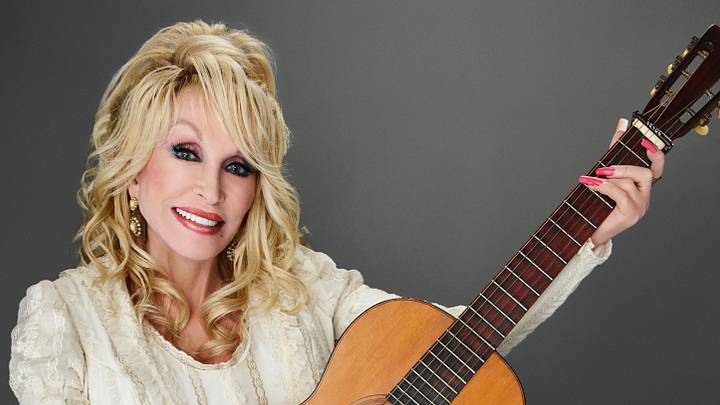
Dolly Parton, who died on Tuesday at the age of 80, was a true giant in the world of American recording. She may have stood barely five feet tall, but her talent and influence seemed limitless. We all knew that she had been in poor health of late, but her death is still a shock. It seemed to all the world that Dolly Parton was truly ageless.
Dolly Parton spanned genres and decades to become one of American music's most important figures
Those artists mentioned above performed with Dolly on her last album, Rockstar. More accurately, they all appeared on the first four tracks of the album. The double disc, in its original release, had 26 more tracks, and almost every one of them featured one or more members of music royalty.
Want more classic rockers? Paul McCartney. Elton John, John Fogerty, Steven Tyler. They were all on board.
Punk? Joan Jett showed up. Metal? Rob Halford and Nikki Sixx on the same song. Country, Dolly’s best-known genre? You had an OG like Emmylou Harris and a new giant like Chris Stapleton. Guitar legends like Waddy Wachtel, Peter Frampton and Warren Haynes. Many of the most important female recording artists – from Stevie Nicks to Melissa Etheridge to Debbie Harry…. I could go on and on. And on.
They all wanted to record with Dolly.
The creation of the Rockstar album really said all you needed to know about Dolly Parton. When she learned she had been nominated for induction into the Rock & Roll Hall of Fame, she initially declined. It wasn’t one of those “I’m too good for this, and you should have put me in years ago” refusals. Dolly was far too classy for that. It was very polite.
“Even though I am extremely flattered and grateful to be nominated for the Rock and Roll Hall of Fame, I don’t feel that I have earned that right. I really do not want votes to be split because of me, so I must respectfully bow out.”
She then added that she hoped to be considered again “if I’m ever worthy.”
She was 76 years old at the time. The RRHOF ignored her request and voted her in anyway. So Dolly set out to earn her entry. A little over a year later, she released Rockstar – more than an hour’s worth of rock music combining her own originals with plenty of rock classics. With help from Brandi Carlile and Pink, she sang the Rolling Stones’ “Satisfaction.” Duetting with Lizzo, she did “Stairway to Heaven.”
For “Let it Be,” who else but Paul and Ringo?
Rock snobs may have dismissed some of the album, but I find it hard to believe anybody, listening with open ears, would not have found an abundance of excellent rock and roll on Rockstar.
By the way, did I mention that it was Dolly's 49th solo album? That is in addition to the 13 studio albums she released with singing partner Porter Wagoner before launching her solo career. Those records set her up for stardom, but Wagoner was not easy to leave. When she finally did leave, she wrote him a song. You may have heard of it. It was called “I Will Always Love You.”
Dolly’s version went to the top of the country charts in 1974 and then again upon rerelease in 1982. Then, a decade later, Whitney Houston made it one of the biggest pop hits ever recorded, with 14 weeks on top of the Billboard pop chart.
That’s the other thing to remember about Dolly. In addition to being a wonderful singer in her own right, she may well be on the Mount Rushmore of all-time American songwriters.
In addition to her own hits like “9 to 5” (her only Billboard Hot 100 chart-topper), “Jolene," “Coat of Many Colors,” “Little Sparrow”… the list goes on … she wrote hit songs for everyone from Kenny Rogers to Tina Turner.
“Little Sparrow” is breathtaking in its sense of foreboding. Recorded with bluegrass legends Alison Krauss, Dan Tyminski, and Jerry Douglas, it remains one of her most heartfelt compositions.
On the other hand, her theme song for the movie 9 to 5 (which she acted in as well), is about as triumphant an anthem as 1980 would produce. On that same album, 9 to 5 and Odd Jobs, she gave a devastating rendition of Woody Guthrie’s immortal poem “Deportee (Plane Wreck at Los Gatos).”
We can debate whether Dolly Parton should be in the Rock and Roll Hall of Fame. It seems to me that the relaxed standards the Hall has used in the past couple of decades made Dolly an entirely worthy inductee even before Rockstar. But I am willing to entertain an opposing POV.
Here’s something that I don’t think anyone disputes. Dolly Parton was a remarkably decent person. She had a down-to-earth approach to life that defied political pigeonholing. In her music and in her public statements, she always showed compassion. She could certainly get worked up – I’m sure she could even lose her temper – but I never remember hearing even a whisper of bad, mean-spirited behavior.
Dolly teamed up with Emmylou Harris and Linda Ronstadt to release the gorgeous Trio album in 1987. They released a second volume 12 years later, Trio II. One of the singles was Neil Young’s “After the Gold Rush,” one of the earliest and best rock songs about the environment.
Dolly changed a line in the second verse from Young’s original “There was a band playing in my head and I felt like getting high….” to “There was a band playing in my head and I felt like I could cry.” I have never bothered to research this, but I assume Dolly’s convictions made singing the line “felt like getting high” uncomfortable.
I happen to love that song. It is one of my favorites of all time. And I love the original line. Usually, I would chafe at anyone daring to alter it.
With Dolly, I didn’t care. She sang what was true to her and it did the song justice. That’s basically what she did for more than sixty years in the music business and we are all lucky for it.
 Add us as a preferred source on Google