

Todd Rundgren is in the Rock & Roll Hall of Fame. His career as a performer, songwriter, musician, and producer speaks for itself. And he has always been outspoken - dating back to the 1970s when he famously tore into John Lennon for being a faux revolutionary.
One of the things his fans have loved most about him is that feistiness. What else would you expect from an artist who proudly wore the nickname “Runt” at the beginning of his career?
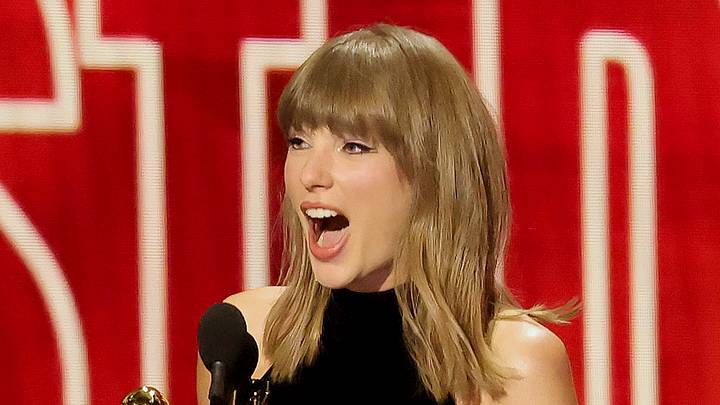
Still, taking on Taylor Swift has an odd aura about it.
Todd Rundgren’s bashing of Taylor Swift seems highly misplaced
This goes beyond the queasy patina of an old white belittling the one of the most successful female recording artists of all time. Swift has proven she does not need the approval of anyone beyond her legion fans to wield her authority over the modern cultural landscape.
Rundgren no doubt understood what was likely to happen when he made his feelings known about Swift in a recent conversation with Vulture’s Devon Ivie. Rundgren’s career as a solo artist peaked more than 40 years ago.
He has not had a charting release since before Taylor Swift was born. Surely he knew that there would be plenty of “Get off my lawn!" accusations of a forgotten celeb trying to ride the coattails of the hottest recording artist on the planet.
“There's an argument to be made that she ruined music. It's an understandable phenomenon. It's just that, to me, Taylor Swift is the apotheosis of mediocrity,"
That is perhaps the most incendiary of the Runt’s recent comments. But it is far from the only criticism he leveled at Swift. He accused her of being an average singer, dancer and songwriter.
“She doesn’t do anything particularly great except grom hair,” he went on.
By way of contrast, he called Lady Gaga “a true musician.”
I lobbied hard for Rundgren’s inclusion in the Rock and Roll Hall of Fame and though I cannot claim to be the biggest fan of his post-Something/Anything? solo work (1972), his contribution to rock and roll as a producer is extraordinary. I don’t doubt for one instant that the feelings he expresses here are genuine. Just as I don’t dispute his right to say them.
I just think he is pretty far off base and I think it is a very bad look.
Start with the qualified statement about Swift’s effect on the “music business.” I always look twice when someone delivers a controversial assessment with the “there’s an argument to be made…” intro. That smacks of an opinion that wants to have things both ways.
But that is merely a semantic complaint. I have been guilty of doing it myself plenty of times. As for the more substantive issues, I’m not sure how Rundgren could possibly argue that Taylor Swift is a mediocre songwriter.
Singer? OK. I’ve never thought her voice was very special. Dancer? I don’t feel qualified to judge that one.
But sure, her dancing doesn’t hit me very hard either. I would note that the record-setting success of her live shows suggests to me that both her singing and dancing are good enough to get the job done, so we are all judging on a sliding scale here. In other words, her singing and dancing are good – not great – by the highest standards imaginable. That strikes me as elevating them above mediocrity.
More importantly, Taylor Swift is not a singer or a dancer … or even a songwriter for that matter. She is an entertainer. As such, she is exceptionally gifted. She does what Al Jolson did. What Bob Dylan continues to do.
Great singers don’t always have the best voices. But they fine material – in the case of Dylan and Swift, it is often material they have written themselves – and they deliver it to their audiences over and over and over again over a very long period of time.
Swift’s popularity is not T. Rextasy or Disco Mania or Chillwave. They had their 15 minutes of culture primacy and then ebbed. Swift has been on top long enough to deserve a little more respect.
As a songwriter, Swift has been inducted into the Songwriters Hall of Fame – the youngest woman ever so honored – and the Nashville Songwriters Hall of Fame – the youngest contemporary artist of any gender. The mere fact that she moved from her roots as a country writer to her global success as a pop writer suggests that she has wide-ranging talent worthy of high praise.
Rundgren never did that. He wrote some sensational songs but to me at least, when he strayed too far from the “I Saw the Light” track, the results were iffy.
If Swift’s songwriting is to be challenged, I would argue the way to do it is by noting its oversaturation. In a very real way, Taylor Swift’s biggest sin as an artist is producing too much material. Some of it has lagged in quality. Hence the brickbats being hurled at her new single “Cleveland” seem entirely deserved.
If “Cleveland!” were representative of Swift’s songwriting, I would agree with Rundgren’s assessment.
It is not. Not to me, at least.
But let’s accept that she really is a run-of-the mill Brill Building hack. To pin the charge of “ruining” music on Taylor Swift is entirely off base. I understand that her success can be seen as a negative for the music business writ large. It’s kind of the same way the Los Angeles Dodgers are currently “ruining” baseball.
The problem is, Swift falls way down the list of those bearing responsibility. Blame the record labels who attempt to repeat Swift’s formula for success with lesser talents. Blame those lesser talents themselves – the copycats who all sound just like Taylor Swift.
Personally, I am very disappointed in one of the most explosive talents on the modern music scene – Molly Tuttle – for attempting to re-imagine herself as the new Taylor Swift. Tuttle’s shift from her bluegrass roots to a poppier sound on her newest album So Long Little Miss Sunshine strikes me as a bad development.
It also just earned her Entertainer of the Year at the 2026 Americana Awards, so perhaps I should be directing my disappointment at an entire apparatus that steers all artists toward replication.
And that really means that the people most responsible for “ruining” music are the fans. A very wide-range of fans adore the music that Taylor Swift creates. That doesn’t mean it is the “best.” It just means that someone like Todd Rundgren needs to offer a much more elucidating explanation of his charge than “she’s only good at growing hair.”
Then again, coming from the songwriter who described the importance of women with the couplet “Talkin’ ‘bout things about that special one – They may be stupid but they sure are fun…”, maybe that is all the explanation he has to offer.
 Add us as a preferred source on Google