

A few years back, the Washington, D.C. Public Library launched an ad campaign with the tagline "What’s more punk rock than the public library?" Now a D.C. writer and musician has borrowed that line for the title of a short book – a collection of newsletters that were printed during the height of the COVID pandemic.
Those newsletters and the little roadside free library they were created to promote somehow resulted in one of the best music books I have read in the past few years.
That was not J. Hunter Bennett’s intention when he began the Nevada Avenue Outdoor Free Bookshop in his leafy D.C. neighborhood back in 2020. The neighborhood is called Chevy Chase, and if you can dissociate the genuinely unpleasant man from the place, it is a lovely spot to live.
Punk rock lives in a small streetside box in northwest Washington, DC
I know because many, many years ago I grew up there, albeit on the Maryland side of Western Avenue. Bennett and his library were just inside the DC line.
So what follows is the story of a recently published book - "More Punk Rock Than the Public Library" - which itself is a story about a series of newsletters and associated free library. That library, as you might guess, contained plenty of stories.
One thing you learn very quickly about Hunter Bennett: he is a sucker for a great story.
Many of those stories are about music. Punk music, in general. But the library and the newsletters and the book did not confine themselves to any one thing. The operating ethos was – if Bennett found it cool, it could be included.
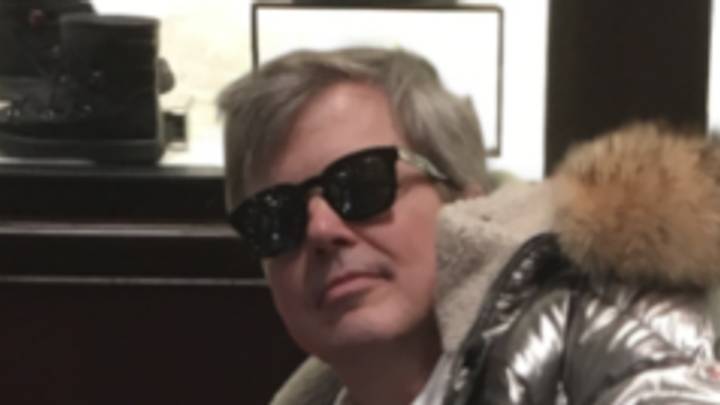
Bennett is a lawyer, an author, husband, parent and dog owner. He also plays bass in a DC punk band called Dot Dash. (Late in the book, the origin of that name is slipped into a story about a long-ago concert.) He has a love for the DC area and its rich punk rock history.
It is the home of Bad Brains and Minor Threat. Henry Rollins grew up in the suburbs and Kathleen Hanna spent a lot of time in the city. When COVID shut down the world, Hunter Bennett had time to indulge that passion.
He began small, installing one of those free library boxes in his neighborhood and filling it with books on the twin pillars of punk and noir. To publicize the library, he began publishing a newsletter. He enlisted the help of his many friends, both in and out of the local punk universe and over the course of a year, that newsletter grew into something pretty special.
Being a library, the newsletter’s initial focus leaned literary. In addition to describing the new titles that were added to the box each month, one of the core features was “HarDCore Reading with…” in which Bennett would query a (usually) local punk rocker on what books they particularly enjoyed.
He also soon added a “Fell in Love with a Book” column, guest written by someone else with ties to the local community about a favorite novel.
And he didn’t stop there. One of the most fascinating aspects of More Punk Than the Public Library is the behind-the-scenes look at how a small passion project evolves. Each month Bennett added new elements ... stories about great concerts, stories about celebrity encounters, movie or album reviews.
His general philosophy as publisher (or “Proprietor,” his preferred title) was the same one expressed by the young Charles Foster Kane in Citizen Kane. When told he knew nothing about publishing a newspaper, Kane tells his filthy-rich former guardian…
“I don’t know how to run a newspaper, Mr. Thatcher. I just try everything I can think of.”
So we get stories that involve DC legend Ian MacKaye (of Minor Threat and Fugazi fame) as well as lesser-known figures who went on to “normal” lives after swimming in the punk waters. Many, like Bennett, never completely abandoned their original passion, despite going onto a wide range of post-punk professions.
In just over 200 small, nearly-pocket-sized pages, you get stories galore, many revolving around the world of punk music. And a few other things, like what to do when you are invited to a dinner party by a host who is a poor cook.
Bennett shut down the newsletter when COVID restrictions were eased and the world began creeping back to normalcy. He was pleased with the year’s worth of newsletters he had produced and realized he could no longer devote the time necessary to keep up the quality.
He approached Microcosm Publishing about a book in 2023 in hopes of giving the newsletter new life. Microcosm had published some of his other writing and seemed eager. But they wanted more than just a collection of the letters.
So Bennett spent a couple of years editing and writing chapter introductions to provide context. His most daunting task was explaining why he had embarked on the project in the first place. What you end up with is a sort of “greatest hits” collection culled from the newsletters, though he is quick to note that a lot of good material had to be left out.
The book was published earlier this year. If you can’t find it in your local bookstore, you can order direct from Microcosm in Portland, Oregon.
In my brief chat with Bennett, I did not ask him about the link between punk and noir. It is clear that he personally likes both genres and since he was the one doing all the work to launch this project, he was going to focus on things he liked.
If you read the book, you will learn the fate that befalls donated material that doesn’t fit into Bennett’s areas of interest. A particular Boris Johnson book comes to mind.
Upon reflection, the link is patently clear. When I used to teach film history, I would tell my students that film noir was not so much a genre as an attitude. Noir as a noun was primarily concerned with crime, but “noir” could also be an adjective, crossing genre lines and infusing that attitude into whatever it touched.
In many ways punk is the same. So it is generally fast and loud, with simple chord structures and rhythms. But once unleashed, punk spewed out everywhere creating pop punk and cowpunk and post punk (which no one has ever really known the meaning of). Punk, with its DIY ethos, is also as much attitude as genre.
And what do these two “attitudes” share? A distrust of accepted norms. A defiance of accepted traditions. Artistically, it can be musical or literary or cinematic. But it goes beyond that. Politically, it often leans left but can be right as well. There are, in fact, conservative punks.
What they share is defiance. The way a record is made. What is and is not acceptable in a crime novel. Whether to trust the school, church, government … or any institution that has long been viewed as the authoritative voice in all societal matters.
That’s the intellectual underpinning of the NAOFB. The fact that such a transgressive entity was birthed from a small box in an affluent urban suburb not far from our nation’s capital … that is just one of many things that makes More Punk Than the Public Library such a fascinating read.
 Add us as a preferred source on Google