

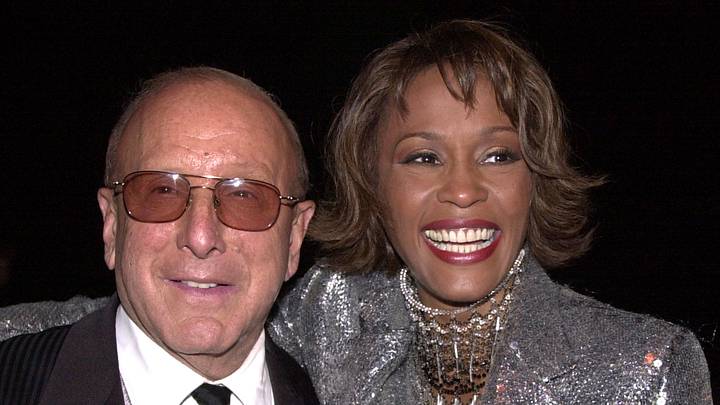
No one is going to capture the giant footprints that Clive Davis left on the world of popular music in a thousand words. Just listing the artists he discovered – or rediscovered – or naming the hit songs he had a personal hand in bringing to life would fill up those thousand words very quickly.
Davis died on Monday at the age of 94. He was among the last of the giants from the rock and roll era. And he was among the only executives who transitioned, evolved, and flourished as the music industry went through massive upheaval.
The outpouring of condolences in the wake of his death is a clear testament to how beloved he was. Though he had slowed down in his 80s and 90s, he had never really stopped looking for the next hit.
Will there ever be another Clive Davis?
To those who knew and admired him, the explanation wasn’t very complicated. Clive Davis loved music. He loved the artists who created music. The genre didn’t matter. The power to touch an audience did. Of course, passion alone does not explain his success. Davis also possessed a singular ear for hits, and he had the work ethic to back it up. Clive Davis had skills and drive. And love.
Maybe the most astonishing thing about Davis’ career is just how expansive it was. Though he came of age as a music man in the late ‘60s and was initially enraptured by rock and roll, the labels he ran found success in virtually every genre. Often, he was at the cutting edge, helping create the next big sound.
His journey had an unlikely beginning. Davis liked music, but he had no particular affinity for it as a young man. It certainly wasn’t a career path. He was very smart and very ambitious. He was orphaned early in life and never took anything for granted. He was going to work hard. It just didn’t seem as if he was going to work hard in music. His field was law.
But one day he got an offer to join the small legal team at Columbia Records. Within five years, he was moved out of the law offices and given control of the label. Columbia was decidedly anti-rock & roll in those days.
That began changing when the straight-laced lawyer attended the Monterrey Pop Festival in 1967 and saw a band called Big Brother and the Holding Company. He was overwhelmed by their lead singer. He didn’t know the name Janis Joplin yet, but he soon would.
Davis signed Joplin to Columbia. He then scooped up Blood, Sweat, and Tears, and Chicago. He grabbed Santana after seeing them at the Fillmore.
Carlos Santana later said that Atlantic Records’ Ahmet Ertegun also wanted to sign the group, but Carlos saw something in Davis that he felt he could trust. The guitarist intentionally sabotaged his own audition with Ertegun, and then blew the roof off when playing for Davis.
Who else did Clive Davis identify and sign in those heady days of rock and roll? How about Bruce Springsteen. Aerosmith. He didn’t discover Miles Davis, but he did encourage the jazz legend to open himself to these new rock acts that the label was bringing in. The result was Bitches Brew, one of the most significant jazz/rock albums ever recorded.
At times, he took an even more active hand. When Simon and Garfunkel were debating what song to make their lead single on their final album in 1970, Paul Simon was thinking of the peppy “Cecelia.” Davis intervened. He pushed for the slower ballad, “Bridge Over Troubled Waters.” Wasn’t it too slow for 1970? Apparently not. It became the biggest song of the year.
Clive Davis had an exceptional ear for hits.
Of course, he didn’t always hit a home run. He had plenty of misses, just as any producer would. And he was not immune from scandal and tragedy. He was forced out of Columbia in 1973 over rumors of fraud. He was later pushed out of the label he subsequently founded, Arista, because some thought him too old.
He was entirely exonerated in the fraud case. And after Arista, he simply founded another label – J Records – and continued his string of hits.
The personal issues cut deeper. Those who knew him always suspected that the early death of both parents left a mark. Decades later, Clive Davis, the most respected executive in the entire industry, was brought to his knees after the death of one of his greatest discoveries, Whitney Houston.
The downfall of another power broker whose career Davis helped launch – Sean Combs – came very late in Davis’ life. He was never really in a position to respond publicly to the Combs’ scandal.
Suffice to say, Clive Davis never had any serious allegations against him during a career that spanned half a century. Indeed, his artists uniformly spoke about how he was the one executive they felt they could trust.
Bob Weir said that very thing in explaining why the Grateful Dead signed with Arista. They promptly released their biggest commercial hit, “Touch of Grey.”
Ten years later, Davis saw his old friend Carlos Santana and encouraged him to seek more radio-friendly songs to get his name back before the public. Together, they created “Smooth,” one of the biggest hits of the decade.
Stories like that never end with Clive Davis. He had a great relationship with Patti Smith in the 1970s and with Alicia Keys in the 1990s. He helped launch Billy Joel. He convinced Barry Manilow that he could sing other people’s songs and still be a great songwriter.
He signed Gil Scott-Herron and Kenny G. When he wanted to build an R&B roster, he scooped up Earth, Wind & Fire. When he turned his sights to country, he found Alan Jackson. Then there was Busta Rhymes.
Ever wonder why the early stars of American Idol had such great success – success that didn’t extend into later seasons? Maybe because Clive Davis had an active hand in the careers of Kelly Clarkson, Carrie Underwood, and Jennifer Hudson.
The list goes on and on. He helped revive the careers of Dionne Warwick and Luther Vandross. He helped Babyface and L.A. Reid launch LaFace Records and put Atlanta on the music map.
I’ve run out of time, and I haven’t even mentioned what he did for Rod Stewart, or the Kinks, or Brooks & Dunn. Or his brave public declaration of his own bisexuality at a time when most established executives would have done anything to keep something like that under wraps. Of his legendary Grammy parties, which, as several artists noted, were bigger than the awards show itself.
Simon Cowell summed up the way Davis was viewed in the industry. “Deep down, we all wanted to be Clive Davis.” Maybe deep down, we all want to hear the hits.
 Add us as a preferred source on Google